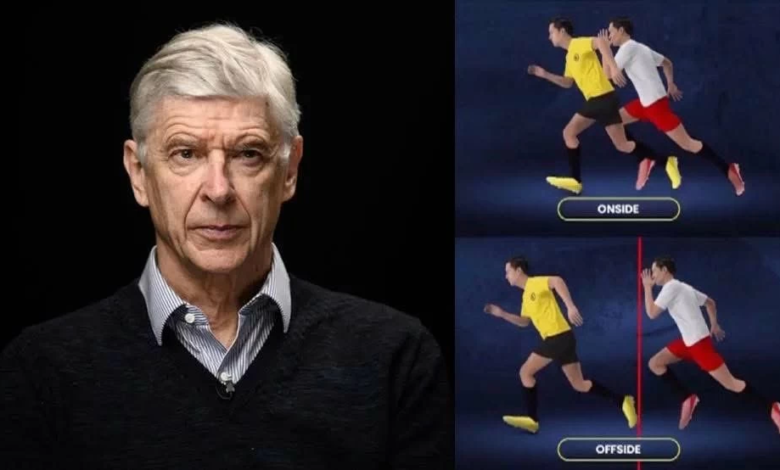
A revolution in the offside law: Wenger introduces the "light rule" for the first time in stadiums

FIFA has announced the adoption of a new offside rule proposed by Frenchman Arsène Wenger, in the Canadian Premier League, making it the first professional league to officially implement this idea.
The new law, known as the "light rule," states that an attacking player is considered onside as long as there is no clear gap (space or light) between him and the last defender. In other words, if any part of the attacker's body that could score is in line with or behind the defender, he is not offside.
This move aims to enhance attacking play and increase the clarity of offside decisions, with Wenger confirming that the trial will help improve understanding of the impact of this change on the flow of matches. The trial was conducted in collaboration with the International Football Association Board (IFAB), the body responsible for the Laws of the Game.
The Canadian league will also see another change, which is allowing coaches to request a review of refereeing decisions via a special card that is handed to the fourth official, within a simplified video support system, which differs from VAR technology, as the review is not done automatically, but rather based on a limited request from the coach in influential cases such as goals, penalties and direct expulsion.
This experiment was launched at the start of the new season on April 4, in a move aimed at putting the Canadian league at the forefront of global football innovation and contributing to the development of the future of the game.
The International Football Federation (FIFA) announced the adoption of a new offside rule proposed by Frenchman Arsène Wenger, to be implemented in the Canadian Premier League, making it the first professional league to officially apply this idea.
The new rule, known as the “light rule,” states that an attacking player is considered onside as long as there is no clear gap (space or light) between them and the last defender. This means that if any part of the attacking player's body that can score is level with or behind the defender, they are not offside.
This step aims to enhance attacking play and increase the clarity of offside decisions, as Wenger confirmed that the experiment will help improve the understanding of the impact of this modification on the flow of matches. This experiment has been adopted in collaboration with the International Football Association Board, the body responsible for the laws of the game.
The Canadian league will also witness another change, allowing coaches to request a review of refereeing decisions through a special card handed to the fourth official, as part of a simplified video support system that differs from VAR, as reviews are not automatic but based on a limited request from the coach in impactful situations such as goals, penalties, and direct red cards.
This experiment began with the start of the new season on April 4, in a move aimed at placing the Canadian league at the forefront of football innovation globally and contributing to the development of the future of the game.