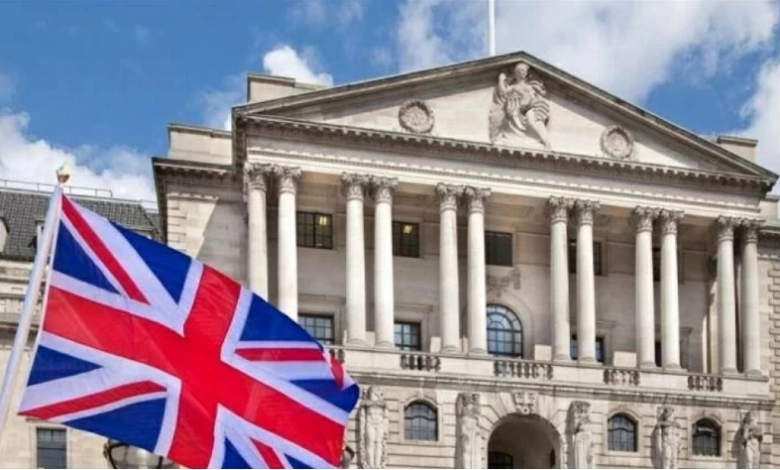
Bank of England and the interest rate decision: Is it time to hold rates steady to combat inflation?

Investors and global markets are focused on the upcoming meeting of the Bank of England's Monetary Policy Committee, with widespread expectations that policymakers will maintain interest rates at their current levels. This anticipation comes amid one of the toughest battles the British economy has faced against a surge in inflation, the highest in decades, placing the central bank in a delicate position requiring a careful balance between curbing prices and avoiding pushing the economy into a deep recession.
Economic analysts generally agree that maintaining the current interest rate is the most likely scenario, despite persistent inflationary pressures. However, experts emphasize that a future rate hike remains a possibility, particularly if upcoming economic data reveals that core inflation, which excludes volatile energy and food prices, remains entrenched and difficult to control.
Historical context and current challenges
The Bank of England's arrival at this point was not unexpected. Since late 2021, the bank had embarked on a series of interest rate hikes in a preemptive attempt to combat soaring inflation. This wave was driven by multiple factors, most notably disruptions to global supply chains following the COVID-19 pandemic and a sharp rise in energy prices, exacerbated by the war in Ukraine, which led to a surge in the cost of living for British households and businesses to levels unseen for generations.
The central bank faces a classic dilemma: raising interest rates is the primary tool for calming demand and reducing inflation, but it simultaneously increases borrowing costs for individuals and businesses, potentially slowing economic growth or even causing a recession. Therefore, the decision to temporarily halt interest rate hikes is seen as a move to give the economy a chance to catch its breath and assess the full impact of previous increases.
The importance and expected effects of the decision
The Bank of England's decision is of paramount importance on several levels. Domestically, it directly impacts millions of British households through interest rates on mortgages, personal loans, and credit cards. Any further increase would add to their financial burdens, while maintaining the current rate provides a sense of temporary stability. It also affects businesses that rely on loans to finance their operations and investments.
Regionally and internationally, other central banks, such as the European Central Bank and the US Federal Reserve, closely monitor the Bank of England's decisions. In a financially interconnected world, the policies of a major central bank can impact exchange rates and global capital flows. The Bank of England's decision will signal its approach to balancing growth and inflation, which could influence the strategies of its counterparts in other advanced economies. The stability of the pound sterling also depends heavily on these decisions, impacting international trade and foreign investment in the UK.