Lamine Yamal as a substitute in the World Cup? Spain's plan to face Saudi Arabia

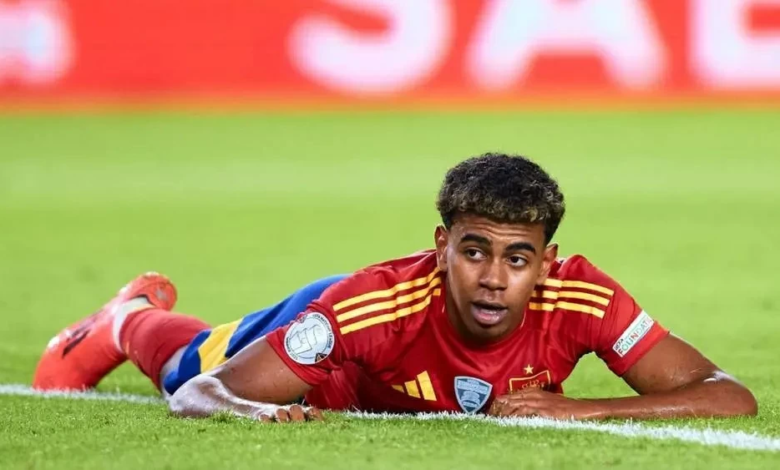
As the 2026 World Cup finals approach, the tactical strategies of the major national teams are beginning to unfold. Within the Spanish national team, a heated debate is taking place regarding the role that young star Lamine Yamal will play. Spanish media reports indicate that coach Luis de la Fuente is seriously considering a tactical option that might surprise many: not starting the Barcelona gem in the starting lineup during the tournament matches, including the upcoming match against Saudi Arabia, in order to protect and manage his physical condition.
Background to the decision: Protecting talent from the curse of injuries
This cautious approach from the Spanish coaching staff comes within a historical context rich with lessons. Spanish football, and Barcelona in particular, has witnessed exceptional talents suffer recurring injuries due to fatigue and intense participation at a young age, such as Ansu Fati and Pedri. De la Fuente seems to be aiming to avoid this scenario with Yamal, considered one of the world's most valuable talents. The player's recent thigh injury, albeit minor, has sounded the alarm and prompted the coach to consider a long-term strategy that preserves the player's career rather than exhausting him in a single tournament, no matter how important.
Importance and expected impact: A double-edged tactic
The decision to bench Yamal, if it happens, will have multiple implications both domestically and internationally. For the Spanish national team, it could mean a change in attacking rhythm and a reliance on other players like Neco Williams or Ferran Torres to start matches. However, it also gives the coach a potent weapon that can be used in crucial moments of a game. Bringing Yamal on for the last 20 or 30 minutes against tired defenders might be more effective than playing him for the full 90 minutes when he's not at his peak physical condition.
For opponents like the Saudi national team, this tactic presents a new challenge. Instead of preparing to counter Yamal's threat from the first minute, they will have to contend with the potential for him to come on as a substitute, capable of changing the course of the game with his speed and exceptional skills. This uncertainty could disrupt the calculations of opposing coaches and force them to devise alternative plans.
De la Fuente's strategy: a "trump card" instead of a "key player"
The tactical approach being developed by the Spanish coaching staff revolves around two main axes:
- Physical management and gradual progression: Involving Yamal in specific and deliberate playing periods during the group stage to avoid any relapse of injury and ensure that he arrives at the knockout stages in full fitness.
- The decisive strategic alternative: keeping Yamal on the bench as a trump card that can turn the tables in difficult moments, taking advantage of the decline in the opponents' fitness towards the end of the match.
De la Fuente believes that 20 minutes of Yamal at his peak fitness would be far more valuable than 90 minutes of him struggling physically. While some see this decision as a necessary protection for the player, others fear it's a tactical risk that could disrupt the Spanish team's cohesion and its ability to secure early victories, especially against defensively organized opponents. The question remains: will De la Fuente's plan succeed and Yamal become Spain's secret weapon at the World Cup, or will his absence from the starting lineup prove to be a costly mistake for La Roja?