Jeddah University supports Vision 2030 by launching 9 promising student companies

In a move reflecting the rapidly evolving role of Saudi academic institutions, Jeddah University has emerged as an incubator for innovation by launching nine student-run startups targeting vital and promising sectors of the local market. This initiative, themed “From Idea to Market,” is part of an academic movement aimed at transforming the creative ideas of talented students into marketable and investable products and services, thereby bridging the gap between educational outcomes and the demands of the real economy.
General context: Saudi universities and keeping pace with Vision 2030
The role of universities in Saudi Arabia is no longer limited to theoretical education; they have become an integral part of an ambitious national economic system. The Jeddah University initiative is central to the objectives of Saudi Vision 2030, which emphasizes the importance of diversifying income sources, building a knowledge-based economy, and empowering youth to become leaders in entrepreneurship. Universities today act as engines of innovation, providing the supportive environment and resources necessary for students to transform their research and graduation projects into competitive and scalable startups, thus contributing to the creation of new job opportunities and reducing reliance on the public sector.
From talent to leadership: details of the initiative
This pioneering event was organized as part of the “University Talent Management” forum, titled “From Talent to Leadership: University Models Making a Difference,” by the university’s Talent Acquisition and Development Department. During the forum, participating students shared their experiences in transforming their ideas into fully-fledged business models.
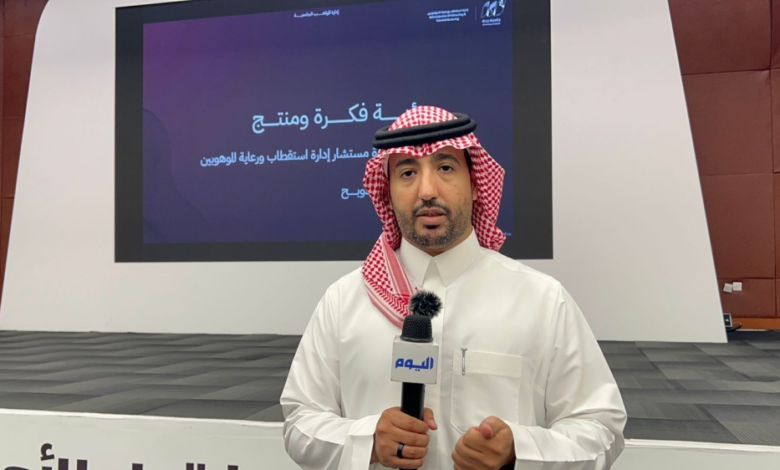
In this context, Dr. Yousef Doubah, Advisor to the Talent Attraction and Development Department, explained that the university is witnessing, for the first time, the launch of “virtual companies” led by talented students. He noted that nine companies have been established so far, with projects ranging from innovative technological solutions to tangible products that address pressing needs in growing development sectors. He added that this experience represents an advanced stage in preparing students to enter the market by simulating a real-world business environment. They are currently working on raising “educational equity” to fund their projects and develop prototypes, paving the way for their commercial launch.
Highlights of student projects and their expected impact
The projects on display varied to reflect the students' awareness of market needs, and some of the most prominent included:
- Event Management Platform: Student Abdullah Saif presented a model for a digital platform designed to facilitate event organization by bringing together all service providers in a single application. The platform utilizes artificial intelligence to offer customized options that suit users' budgets and event types, enhancing the user experience and creating a more organized market for this sector.
- The “Nawaa” Congestion Management Project: Student Linda Al Menhali presented the “Nawaa” project, a digital platform specializing in monitoring congestion in service establishments such as clinics, hotels, and restaurants. The project aims to reduce waiting times and improve mobility efficiency, representing a promising investment opportunity in the logistics and service sector, especially with the global trend towards smart cities.
Economic and future importance
The significance of these initiatives lies in their aim not only to produce graduates but also to cultivate entrepreneurs who contribute effectively to the GDP. Transforming the university environment into an incubator for startups opens doors for investors seeking innovative and viable ideas, and supports the national economy by creating innovative businesses capable of competing locally and regionally. These projects reflect a growing trend toward empowering youth with the tools of innovation, ensuring sustainable development and fulfilling the Kingdom's future aspirations.