
Introduction to the exploitation of education in Yemen
The educational process in Houthi-controlled areas of Yemen is witnessing a continuous decline, with increasing reports confirming Houthi pressure linking education to forced summer camps. These practices constitute a blatant violation of children's rights to safe and impartial education and are part of the militia's efforts to alter the cultural and national identity of future generations.
General context and historical background of the event
Since the Houthis seized control of the Yemeni capital, Sana'a, in late 2014, the education sector has been systematically undermined. This has not only involved altering school curricula to align with the group's ideological and sectarian agenda, but also forcing teachers to work without pay and using schools as military recruitment centers. In this context, summer camps have emerged as a key tool the militia uses annually to recruit children and young people. The recent move to link academic success or obtaining school documents to attendance at these camps represents a dangerous escalation aimed at coercing families into sending their children to these indoctrination centers against their will.
Details of Houthi pressure on students and parents
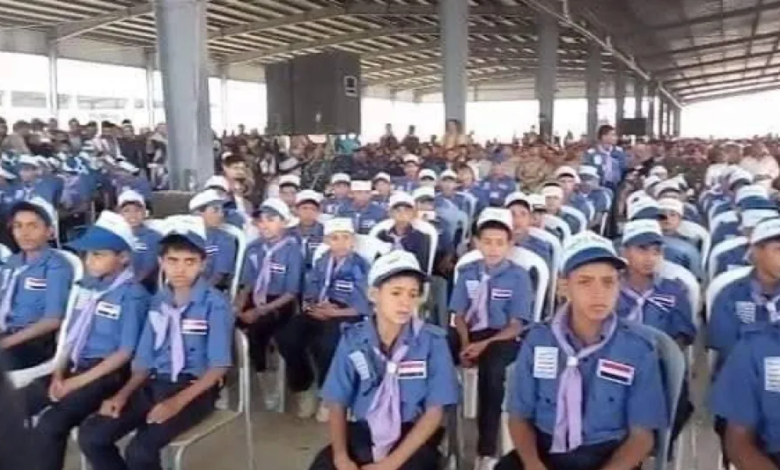
Local and human rights sources indicate that the Houthi militia has issued unannounced directives to school principals to mobilize students for summer camps. These directives include veiled threats to withhold students' diplomas or obstruct their education if they fail to attend. In these forced summer camps, children are indoctrinated with extremist ideologies and trained in the use of weapons, paving the way for their recruitment and deployment to the front lines. This explains the anxiety of parents who find themselves caught between the hammer of depriving their children of education and the anvil of exposing them to brainwashing and military danger.
Local impact: Destruction of the social fabric and the future of generations
Domestically, these practices are tearing apart the fabric of Yemeni society. Transforming schools and summer camps into factories for producing fighters instead of future builders threatens to create a generation steeped in hatred and extremism. These pressures also increase school dropout rates, as some parents prefer to keep their children at home rather than send them to an educational environment rife with sectarian ideas and incitement to violence.
Regional and international impact: a violation of international conventions
Regionally and internationally, this Houthi trend is deeply concerning. The use of children in armed conflict and their recruitment through summer camps constitutes a clear violation of international humanitarian law and the Convention on the Rights of the Child, which Yemen has ratified. International organizations, including the United Nations and UNICEF, have long warned of the dangers of militarizing education in Yemen. The continuation of these violations not only hinders current peace efforts but also sows the seeds for future conflicts that could extend beyond Yemen's borders and affect the security and stability of the entire region.
conclusion
In conclusion, addressing the Houthi practice of linking education to forced summer camps requires decisive intervention from the international community and human rights organizations. Pressure must be exerted on the militia to keep education separate from political and military conflicts, and to guarantee the right of Yemeni children to a safe learning environment that contributes to building a brighter future for Yemen, free from the language of war and extremism.