
recorded King Abdullah Medical Citya new medical achievement that adds to its record of successes, after they were able, thanks to God, to save the life of a fifty-year-old patient who suffered an acute heart attack that led to cardiac arrest, through an urgent and professional medical intervention that embodies the efficiency of the Saudi healthcare model.
Case details and urgent intervention
The story began when the 52-year-old patient was urgently transferred from Al Noor Specialist Hospital last Friday. Upon arrival, tests and a thorough medical diagnosis revealed he had suffered an acute lower angina pectoris, which rapidly progressed to cause cardiac arrest due to ventricular fibrillation that lasted for several minutes—a critical condition requiring immediate life-saving intervention.
The cardiac care team handled the situation with high professionalism, as they succeeded in restoring the pulse and stabilizing the condition initially through advanced cardiopulmonary resuscitation procedures and the use of electric shocks, so that the emergency cardiac catheterization route could be activated immediately to ensure that the condition would not deteriorate again.
Accuracy of the medical procedure and efficiency of the team
The medical team for this delicate procedure was led by Dr. Saleh Mohammed Khoja, a consultant in cardiac catheterization, with the participation of Dr. Kamal Raafat, a catheterization specialist, and with the full support of the anesthesia, nursing, and technical staff. The team performed a successful initial intervention via the radial artery in the hand, a procedure characterized by its precision and reduced risk of bleeding complications compared to traditional methods.
The team was able to open the blocked coronary artery and implant a modern drug-eluting stent, which led to the restoration of full blood flow to the heart muscle within the globally recommended standard treatment time, a crucial factor that directly contributed to reducing heart muscle damage and increasing the patient's chances of full recovery.
The importance of integration in the health system
This achievement highlights the importance of integration among the facilities of the Makkah Health Cluster. The rapid transfer from Al-Noor Specialist Hospital to King Abdullah Medical City reflects the healthcare system's readiness to handle critical cases. King Abdullah Medical City is a leading specialized center in the region, particularly in the field of cardiology and cardiac surgery. It boasts advanced infrastructure and highly qualified staff capable of managing the most complex medical cases around the clock, thus enhancing the health security of the residents and visitors of the Holy City.
Recovery and follow-up phase
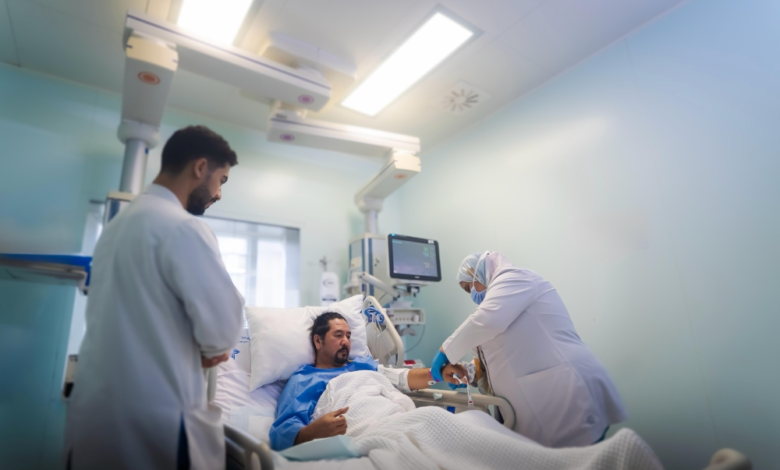
Following the successful medical procedure, the patient was transferred to the cardiac intensive care unit for close monitoring of cardiac and respiratory function. Thanks to intensive care, the patient was successfully weaned off the ventilator, blood pressure was stabilized, and the drug therapy protocol was initiated promptly.
The medical center confirmed that the patient has regained full consciousness and is currently breathing normally without any assistance. Chest pain and shortness of breath have disappeared, and his condition is described as stable. The patient is currently undergoing further cardiac evaluation via echocardiography to develop a comprehensive post-discharge cardiac rehabilitation plan to ensure his return to a normal life.