North Korea rejects the Nuclear Non-Proliferation Treaty | A global challenge

North Korea reiterated its refusal to abide by the Nuclear Non-Proliferation Treaty, emphasizing that its status as a nuclear-armed state is “final and irreversible.” This stance was articulated by Pyongyang’s envoy to the United Nations, Kim Song, who stated that external pressure would not alter the fact that his country is a nuclear power, according to a statement carried by the official Korean Central News Agency.
Historical background: A strained relationship with the treaty
North Korea’s current stance is not a sudden development, but rather the culmination of decades of tension with the international community. Pyongyang joined the Nuclear Non-Proliferation Treaty (NPT) in 1985, but disagreements soon arose regarding its nuclear program. In 1993, it threatened to withdraw from the treaty for the first time, before suspending its decision under the “framework agreement” with the United States in 1994. However, this agreement collapsed at the beginning of the millennium, leading North Korea to formally withdraw from the treaty in January 2003.
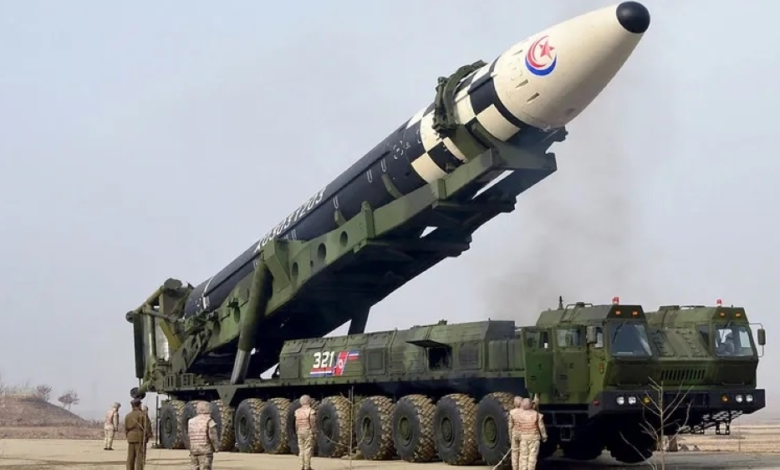
Since then, Pyongyang has rapidly advanced its nuclear capabilities, conducting six confirmed nuclear tests between 2006 and 2017, in addition to developing a growing arsenal of ballistic missiles capable of carrying nuclear warheads. These actions have led to a series of stringent international sanctions imposed by the United Nations Security Council.
Regional and international importance and influence
North Korea’s insistence on its nuclear status poses a major challenge to the global non-proliferation regime upon which the Treaty on the Non-Proliferation of Nuclear Weapons (NPT) rests. Regionally, its nuclear program is a major concern for its neighbors, particularly South Korea and Japan, and is fueling an arms race in Northeast Asia, one of the world’s most volatile regions. This situation also puts its main ally, China, in a difficult position. Beijing officially supports the denuclearization of the Korean Peninsula but fears the collapse of the Pyongyang regime and the resulting chaos on its borders.
Internationally, North Korea’s stance undermines the credibility of the Nuclear Non-Proliferation Treaty and threatens to open the door for other countries to seek similar weapons. The North Korean envoy emphasized that his country’s status as a nuclear power is enshrined in its constitution and that the principles governing the use of these weapons are clear, asserting that this status is an “exercise of sovereign rights.” With this statement, Pyongyang closes the door to any negotiations that might require the dismantling of its arsenal as an ultimate goal, and insists that any future dialogue must begin with recognition of its status as a nuclear state.