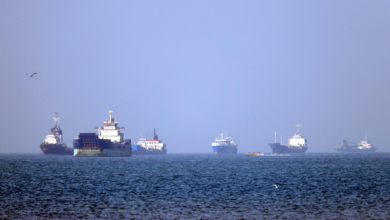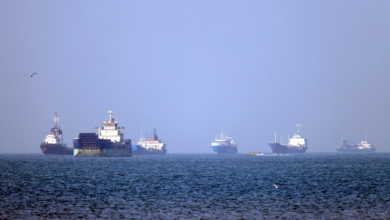

The US Central Command (CENTCOM) announced that a US Navy fighter jet intercepted an Iranian-flagged oil tanker after the vessel attempted to violate sanctions against Iranian ports and ignored repeated warnings. This incident marks the latest in a series of ongoing maritime tensions between Washington and Tehran in the strategic waters of the Persian Gulf.
Details of the military operation
According to a statement released by U.S. Central Command via the “X” platform, U.S. forces issued clear warnings to the Iranian vessel to stop and comply with instructions, given its violation of international sanctions. However, the tanker's crew ignored these warnings and continued on its course. As a result of this non-compliance, a U.S. F/A-18 Super Hornet fighter jet was scrambled and conducted a precision strike, targeting the tanker's rudder with its 20mm cannon. The Command confirmed that this action was designed to disable and immobilize the vessel without causing significant damage to its hull or endangering the lives of its crew.
A historical context of ongoing tensions
This confrontation comes against a backdrop of escalating tensions between the United States and Iran, which intensified particularly after Washington withdrew from the nuclear agreement (the Joint Comprehensive Plan of Action) in 2018 and reimposed crippling economic sanctions as part of its “maximum pressure” campaign. These sanctions primarily target Iran’s oil sector, the lifeblood of the country’s economy. Since then, vital waterways in the region, especially the Strait of Hormuz through which a fifth of the world’s oil consumption passes, have witnessed numerous similar incidents, including the seizure of oil tankers by both sides and confrontations between Iranian and American naval vessels.
Strategic importance and potential impacts
This incident carries significant strategic implications on several levels. Domestically, it exacerbates the already strained Iranian economy and demonstrates the United States' resolve in enforcing sanctions. Regionally, it raises tensions in the already volatile Gulf region and could prompt Iran to retaliate through its proxies. Internationally, such incidents raise concerns about maritime safety and the stability of global energy supplies, as any military escalation could lead to a sharp rise in oil prices. They also send a clear message to global shipping companies about the risks associated with attempting to handle sanctioned Iranian oil.
US fleet movements in the region
This operation coincides with broader movements of US naval assets in the Middle East. While the world’s newest and largest aircraft carrier, the USS Gerald R. Ford, recently departed the Mediterranean Sea in a move that could be interpreted as a de-escalation, US officials have emphasized that a significant military presence remains in the region. Other aircraft carriers, such as the USS Abraham Lincoln and the USS George H.W. Bush, are still deployed to ensure deterrence and maintain the security of waterways, underscoring that US strategy remains focused on projecting power to impose stability and secure vital interests in the Middle East.