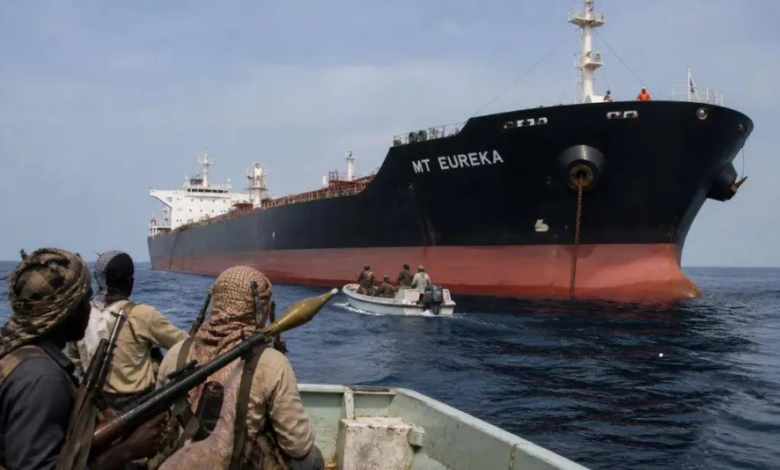

Yemeni government sources announced the failure of efforts to rescue an oil tanker hijacked by Somali pirates in international waters off the Gulf of Aden. This announcement highlights the renewed threat of maritime piracy in one of the world's most important shipping lanes and raises questions about the ability of local and regional forces to counter this escalating danger amidst the complex security challenges facing the region.
The specter of piracy returns to the Horn of Africa
The Horn of Africa, particularly off the coast of Somalia, witnessed the peak of piracy attacks between 2008 and 2012, costing global trade billions of dollars and prompting the international community to form joint naval forces, such as the European Union's Operation Atalanta and Combined Task Force 151 (CTF-151), to combat this threat. These efforts, along with the adoption of best management practices by shipping companies and the use of armed guards on board vessels, succeeded in almost completely eliminating piracy incidents for nearly a decade. However, recent years have seen a sporadic resurgence of these attacks. Experts attribute this to a reduced international naval presence in the region, a focus on other security challenges such as the Houthi attacks in the Red Sea, and the continued political and economic instability in Somalia, which provides fertile ground for the return of these criminal activities.
Widespread regional and international repercussions
The failure of the latest rescue operation is a dangerous indicator of the pirates' growing audacity and their ability to exploit security gaps in the region. Domestically, this incident reveals the limited capabilities of Yemeni forces, exhausted by years of civil war, to secure their vast coastline and contribute effectively to regional maritime security. Regionally, the resurgence of piracy threatens shipping in the Gulf of Aden and the Bab el-Mandeb Strait, potentially forcing shipping companies to seek alternative and more expensive routes and driving up insurance premiums for vessels transiting the area.
Internationally, this development puts global maritime security to the test once again. The stability of this waterway is crucial for the flow of global trade, particularly energy supplies from the Arabian Gulf to Europe and North America. This incident is expected to lead to renewed calls for enhanced international cooperation and increased maritime patrols in the region to prevent such isolated incidents from becoming widespread, as they have been in the past, and to protect the lives of seafarers and ensure the safety of global supply chains.