The International Monetary Fund warns: Raising interest rates threatens growth

IMF warns against rushing to raise interest rates
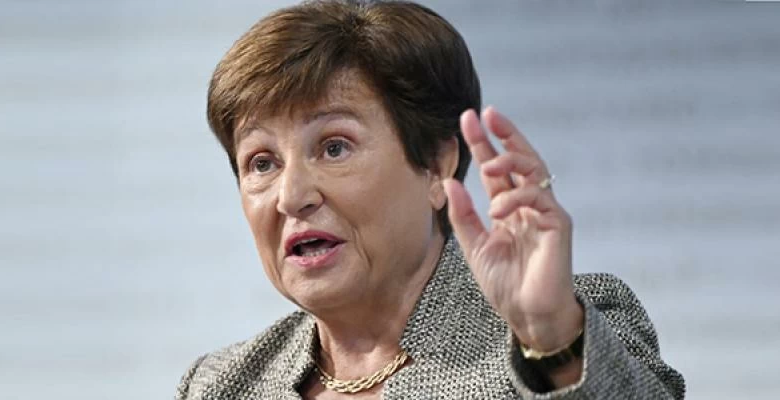
Kristalina Georgieva, Managing Director of the International Monetary Fund, expressed deep concerns about current global monetary policies. She stressed that central banks worldwide should not rush into raising interest rates in response to geopolitical tensions and conflicts in the Middle East. She explained that taking ill-considered steps in this direction could severely damage the already fragile global economy.
General context and historical background of monetary policies
To understand these warnings, one must consider the recent historical context. In 2022, the world experienced an unprecedented wave of inflation as a result of the COVID-19 pandemic and the outbreak of the Russian-Ukrainian war. This prompted major central banks, such as the US Federal Reserve and the European Central Bank, to adopt tight monetary policies and raise interest rates rapidly to control prices. Georgieva fears that the “2022 syndrome” might lead policymakers today to repeat the same rapid response whenever new shocks emerge, which could be dangerous in the current circumstances and stifle economic growth rather than address inflation.
Inflation expectations and a wait-and-see approach
In a recent interview with Bloomberg TV on the sidelines of the IMF and World Bank Spring Meetings in Washington, D.C., Georgieva explained that long-term inflation expectations remain robust and stable, and have not changed drastically. Accordingly, she stressed the importance of central banks proceeding with extreme caution. She added that banks with strong credibility and sound institutional foundations can adopt a “wait-and-see” approach, sending clear signals to markets that they are prepared to intervene if necessary, without resorting to overly proactive measures.
Global economic growth forecasts have declined
In a related development, the International Monetary Fund (IMF), the world's financial safety net during times of crisis, lowered its forecast for global economic growth this year to 3.1%. This downward revision came after escalating tensions in the Middle East, including fears of a wider conflict and its impact on supply lines, triggered a major oil shock that rattled global markets.
Expected impact at the local, regional, and international levels
This event is of paramount importance and has far-reaching implications. Internationally, financial officials are leaning towards more pessimistic scenarios, with forecasts predicting a decline in global growth to just 2.5% this year, coinciding with a rise in the average spot price of oil to around $100 per barrel. This increase in energy costs will place an additional burden on oil-importing countries.
At the regional and local levels, the continued rise in global interest rates is putting pressure on local currencies in emerging markets and developing countries, and increasing the cost of servicing external debt, thus limiting governments' ability to finance domestic development projects. Conversely, while oil-exporting countries in the Middle East may benefit from higher energy prices in the short term, they remain vulnerable to the risks of a global economic slowdown, which could reduce aggregate demand for their exports in the long term. Therefore, maintaining fiscal and monetary balance remains the optimal approach to navigating this critical phase.