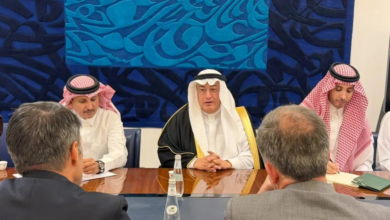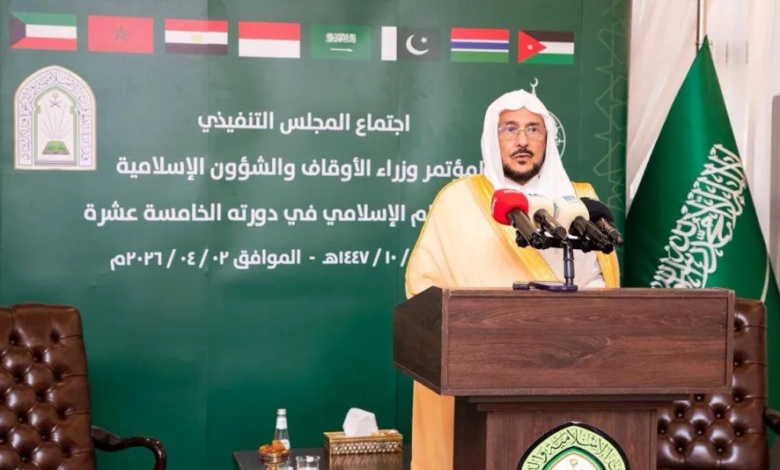
The Conference of Ministers of Religious Endowments condemns Iranian attacks in the region

Introduction: A firm stance against foreign interference
The Executive Council of the Conference of Ministers of Endowments and Islamic Affairs issued a strongly worded statement condemning Iran's continued aggression and blatant interference in the affairs of the region's countries. This firm stance comes at a time of escalating regional tensions, requiring concerted and unified Arab and Islamic efforts to confront the challenges threatening security and stability. The Council affirmed that these practices contravene the principles of good neighborliness and international laws and norms that stipulate respect for the sovereignty of states and the rejection of interference in their internal affairs.
General context and historical background of the event
The Conference of Ministers of Endowments and Islamic Affairs was established to promote Islamic solidarity and coordinate positions among member states on issues affecting the identity and security of Muslim societies. Over the past decades, the Middle East has suffered from expansionist policies and continuous interference by Tehran, manifested in its support for armed militias and sectarian groups in several Arab countries. This interference has not been limited to the political and military spheres, but has also included attempts to destabilize the social and intellectual fabric by exploiting religious discourse for political ends. Therefore, the intervention of major religious and official institutions, such as the Conference of Ministers of Endowments, is crucial to expose these practices and remove the religious cover that some parties attempt to exploit to justify their hostile actions and conceal Iranian aggression repeated
The importance of the event and its profound implications
The significance of the condemnation issued by the Executive Council of the Conference of Ministers of Religious Endowments lies in the fact that it comes from a body representing the religious and institutional conscience of the Islamic world. This statement sends a clear message that the Islamic world categorically rejects the exploitation of religion or sectarianism as a tool to incite discord and conflict. This stance also reflects a growing awareness of the dangers of a project that seeks to export internal crises to neighboring countries, thereby hindering development and reconstruction efforts in the Arab and Islamic world and threatening civil peace.
Expected impact: locally, regionally, and internationally
On the local level: This position strengthens the cohesion of the internal fronts in the countries affected by Iranian aggression, and gives their people reassurance that there is broad institutional and Islamic support for their sovereignty and their right to live in security and peace, away from any external dictates or interventions.
At the regional level, the statement contributes to forging a unified Arab and Islamic stance, strengthening the position of states in regional forums and increasing diplomatic and political pressure to reverse hostile policies. It also encourages enhanced security and intellectual cooperation among ministries of religious endowments to combat extremism and sectarianism in all its forms.
At the international level, this consensus sends a strong message to the international community and UN organizations about the need to uphold their responsibilities for maintaining international peace and security. Condemnation by such influential institutions provides moral and political support for international resolutions aimed at curbing destabilizing activities and underscores the necessity for all states to respect the UN Charter and the principles of international law.
conclusion
In conclusion, the statement issued by the Executive Council of the Conference of Ministers of Religious Endowments represents a significant strategic step in addressing foreign interference. It affirms that regional stability can only be achieved through mutual respect, strict adherence to the principles of good neighborliness, and the rejection of all forms of interference that fuel conflicts and threaten the future of coming generations.