A campaign to combat endometriosis: symptoms, treatment, and awareness

The Executive Director of King Fahd University Hospital in Al-Khobar, affiliated with Imam Abdulrahman bin Faisal University, Dr. Abdullah Yousef, inaugurated a major awareness campaign under the slogan "Beyond the Endometrium." This campaign aims to shed light on endometriosis, and was attended by the Director of Medical Services, Dr. Majid Al-Abdali, the Head of the Obstetrics and Gynecology Department, Dr. Noura Al-Qahtani, and with the active participation of the Saudi Society of Obstetrics and Gynecology and the university's Medical Club.
Global and historical context of the disease
Endometriosis is a chronic disease that women have long suffered from in silence throughout medical history. World Health Organization statistics indicate that this disease affects approximately 10% of women and girls of reproductive age globally, representing roughly 190 million women worldwide. Historically, severe menstrual pain was misunderstood and ignored, leading to delayed diagnosis, typically 7 to 10 years after the onset of symptoms. This underscores the critical importance of such campaigns in correcting medical and societal misconceptions.
Campaign impact locally and regionally
At the local level, this initiative aligns with the goals of Saudi Vision 2030 in the healthcare sector, which focuses on promoting prevention, improving quality of life, and raising health awareness among all members of society. Regionally, the Kingdom is a leader in launching specialized health initiatives that contribute to reducing the economic and psychological burden associated with delayed childbearing and the health complications resulting from complex gynecological diseases.
The nature of the disease and its impact on quality of life
Dr. Noura Al-Qahtani, Head of the Obstetrics and Gynecology Department at King Saud University Hospital, Imam Abdulrahman bin Faisal University
Dr. Noura Al-Qahtani, Head of the Obstetrics and Gynecology Department, explained that endometriosis is a condition where cells similar to the uterine lining grow outside the uterus, migrating and settling in the ovaries, fallopian tubes, or pelvic area, and in rare cases, other organs. She emphasized that this disease directly impacts quality of life and fertility, noting that symptoms range from complete absence of a uterine lining to severe and debilitating pain.
Dr. Al-Qahtani highlighted an important medical fact: approximately 10% of cases of delayed pregnancy are directly attributable to endometriosis. While preventing the disease is currently difficult due to the lack of a definitive understanding of its precise causes, early diagnosis plays a crucial role in reducing complications such as adhesions and cyst formation, particularly in women between their twenties and forties. Multiple treatment options are now available to alleviate symptoms, making it essential to consult a doctor if any unusual symptoms are experienced to ensure early intervention.
Targeting the most vulnerable groups

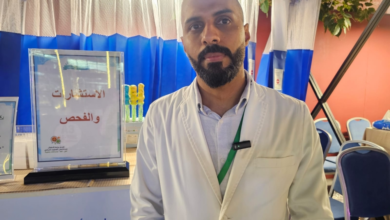
Dr. Camelia Al-Obaid is a consultant obstetrician and gynecologist at King Fahd University Hospital in Al-Khobar
For her part, Dr. Kamilia Al-Obaid, a consultant in obstetrics and gynecology, confirmed that the campaign primarily targets women aged 18 to 45, with a strong focus on the most vulnerable group, those between 25 and 35. She explained that the similarity of endometriosis symptoms to other gynecological conditions makes diagnosis a medical challenge that requires a high level of community awareness to guide patients toward accurate examination.
Correcting misconceptions and supporting the family

Renad Al Rabah, leader of the student club for Obstetrics and Gynecology at Imam Abdulrahman bin Faisal University
In a related context, Renad Al Rabah, the head of the Obstetrics and Gynecology Student Club, stated that the initiative strives to correct common misconceptions. She cautioned against the societal assumption that "not all pain during menstruation is normal," emphasizing that severe pain could indicate a problem requiring investigation.
The campaign includes five integrated awareness corners to ensure that information is delivered correctly: an introductory corner explaining what the disease is, followed by a corner dedicated to symptoms, then a corner highlighting methods of diagnosis, in addition to a corner explaining treatment and support options, leading up to the “Consult Your Doctor” corner which allows visitors to ask their questions to specialist doctors.
The campaign concluded by emphasizing the importance of targeting all segments of society, including men, to promote family support for those affected, highlighting the role of student initiatives in spreading health awareness and improving quality of life.