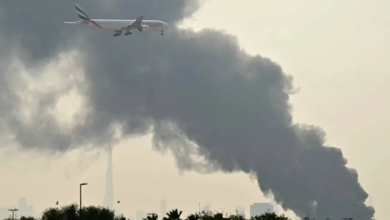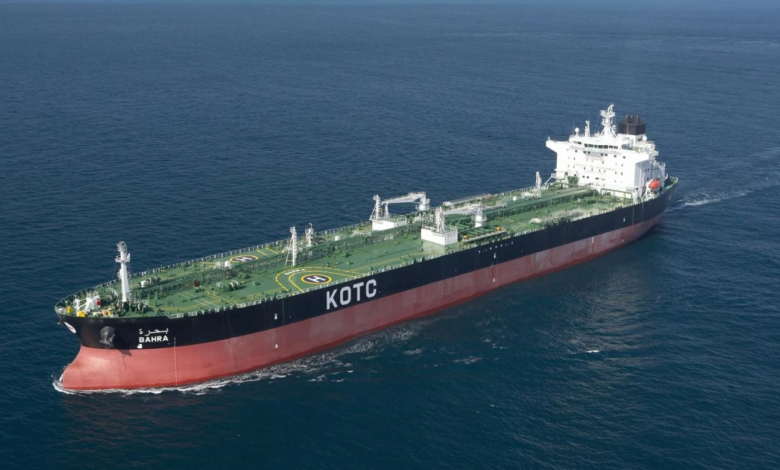

Details of the attack on the Kuwaiti oil tanker “Al-Salmi”
The Kuwait Petroleum Corporation announced on Tuesday that the Kuwaiti supertanker "Al-Salmi" was directly targeted by Iran while anchored in the port of Dubai in the United Arab Emirates. This serious incident raises numerous questions about maritime security in one of the world's most strategically important regions.
The Kuwait Petroleum Corporation (KPC) stated in its official statement that the targeted tanker was fully laden with crude oil at the time of the incident, which exacerbated the situation. The attack resulted in significant material damage to the vessel's hull, as well as a fire on board. Initial reports indicate a high probability of an oil spill in the surrounding waters, raising the specter of a potential environmental disaster requiring immediate intervention to contain the situation. On a positive note, KPC confirmed that no injuries were sustained by the tanker's crew as a result of the incident, and emphasized that work is currently underway to conduct a thorough and comprehensive assessment of the damage.
General context and historical background of the event
Targeting oil tankers in the Arabian Gulf is not unprecedented; rather, it evokes a history fraught with tensions. In the 1980s, specifically during what became known as the "Tanker War" of the Iran-Iraq War, numerous Kuwaiti and other Gulf oil tankers were subjected to similar attacks, prompting international intervention to protect shipping lanes. In recent years, particularly since 2019, the territorial waters near the Strait of Hormuz and the UAE coast have witnessed a series of sabotage attacks targeting commercial vessels and oil tankers, with fingers pointing at Tehran. This reflects the continued instability in these vital waterways.
The importance of the event and its expected impact locally and regionally
At the local and regional levels, this attack poses a direct threat to the economic and environmental security of the Gulf Cooperation Council (GCC) states. The potential for a crude oil spill from the tanker "Al-Salmi" could pollute the Gulf waters, negatively impacting marine wildlife and threatening desalination plants upon which the region's countries heavily rely. Furthermore, targeting a Kuwaiti vessel in Emirati waters represents a security escalation requiring joint Gulf coordination to ensure maritime safety and protect shared interests.
International repercussions and their impact on energy markets
On the international level, this incident has serious repercussions for global energy markets. The Arabian Gulf and the Strait of Hormuz are the main arteries for the flow of oil to the world, with approximately one-fifth of global oil consumption passing through them daily. Any threat to the security of these waterways immediately leads to sharp fluctuations in global oil prices and raises concerns among major industrialized energy-importing nations. Therefore, this incident is expected to provoke widespread international reactions and calls for increased maritime security presence to guarantee freedom of navigation and secure global energy supplies from any future threats that could disrupt supply chains.