
US rejects ceasefire proposal and military operations continue
The White House confirmed on Monday that the United States is considering an international proposal aimed at establishing a temporary truce, but President Donald Trump has refused to endorse a 45-day ceasefire proposal with Iran. These developments come amid unprecedented geopolitical tensions in the Middle East, where the US administration prefers to proceed with joint military operations with Israel against the Islamic Republic of Iran, currently ignoring diplomatic efforts to de-escalate the situation.
The role of regional mediators in attempts to de-escalate tensions
American media reports indicate that regional and international mediators, namely Pakistan, Turkey, and Egypt, have put forward this diplomatic proposal in an attempt to de-escalate tensions and prevent the region from sliding into a full-blown regional war. These countries aim, through their initiative, to open a window for diplomatic dialogue and reduce the level of tension. However, the firm American stance has prevented the implementation of this temporary truce, reflecting the complexity of the political and military landscape in the region.
White House statements on Operation Epic Rage
In response to this initiative, a senior White House official stated that the proposal was just one of several ideas under discussion, emphasizing that President Trump had not yet approved it. The official added that the military operation, dubbed Operation Epic Wrath, was continuing in full force, reflecting Washington and Tel Aviv's determination to achieve their stated strategic objectives before considering a return to the negotiating table.
The historical context of US-Iranian relations
Historically, US-Iranian relations have been characterized by deep-seated hostility for decades, specifically since the 1979 hostage crisis. During his previous term, Trump adopted a policy of “maximum pressure,” which included unilaterally withdrawing from the nuclear agreement in 2018 and imposing crippling economic sanctions on Tehran. Today, the US administration appears to be continuing this approach, but through direct and open military escalation, in close cooperation with Israel, representing a radical and dangerous shift in the traditional rules of engagement in the Middle East.
The economic and geopolitical repercussions of the continuation of the war
This American rejection of a ceasefire has significant regional and international repercussions. Economically, the continuation of the war raises serious concerns about the security of maritime navigation in the Strait of Hormuz, through which a large portion of the world's oil supply passes. Any further escalation could lead to severe shocks in global energy markets, negatively impacting a global economy already grappling with inflationary challenges. Regionally, the ongoing military operations have put neighboring countries on high alert, amid serious fears that the conflict could expand to include new fronts and actors.
Awaited press conference by President Trump
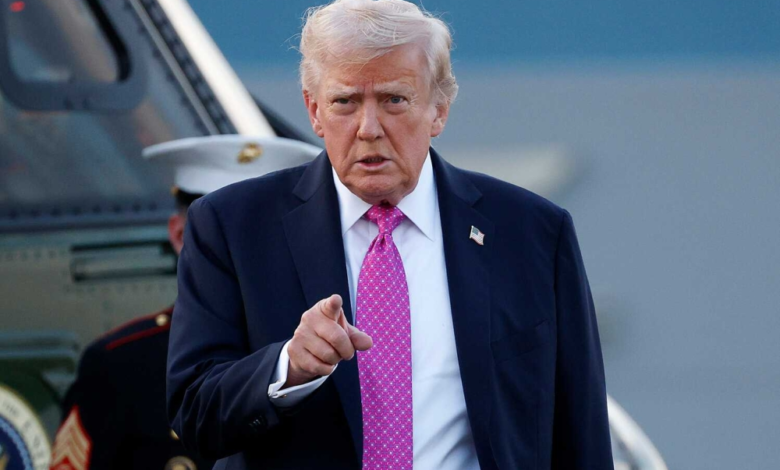
In a related development, a White House official announced that President Donald Trump will hold a major press conference at 1:00 PM on Monday (17:00 GMT). Trump is expected to address the ongoing conflict, which has now lasted for over a month, and explain to the American and international public his reasons for rejecting the proposed ceasefire. He is also expected to outline the future steps of the US-Israeli alliance in confronting Tehran.