The future of the Strait of Hormuz: A decisive Iranian response to Trump's statements

Araghchi's statements regarding the future of the Strait of Hormuz
Iranian Foreign Minister Abbas Araqchi asserted in a decisive statement that the future Strait of Hormuz will be determined exclusively by the Islamic Republic of Iran and the Sultanate of Oman, as the two littoral states of this vital waterway. These remarks come amidst escalating geopolitical tensions in the Middle East, and specifically as a direct response to recent statements by US President Donald Trump regarding navigation in the region.
In a related context, the Iranian Foreign Ministry spokesperson emphasized Tehran's sovereign position, clarifying that the decision to open or close the Strait of Hormuz rests entirely with Iran and is a purely national decision. He stated unequivocally, "We will not open the Strait of Hormuz based on external dictates; it will be opened by our own decision, not by the decision of the American president." This statement reflects Tehran's continued adherence to its strategic leverage in the region in the face of American pressure.
Trump sets conditions for a ceasefire
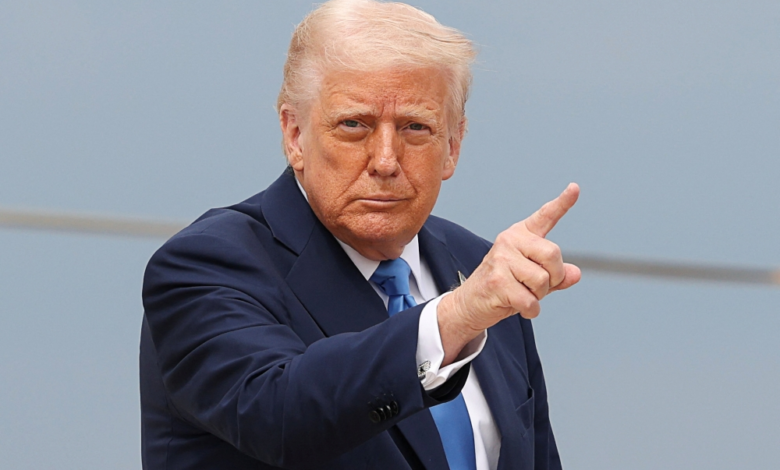
On the other hand, US President Donald Trump stated on Wednesday that the new Iranian leadership had submitted an urgent request to the United States for a ceasefire. In a post on his official Truth Social account, Trump linked the acceptance of this request to the issue of navigation in the Strait of Hormuz, saying, "We will decide on the request of the new Iranian president once they open the Strait of Hormuz." Trump did not stop there, but added in a notable escalation of his rhetoric: "The new Iranian president is smarter than his predecessors... but we will return Iran to the Stone Age" if it does not comply with US conditions and demands.
The strategic and historical importance of the Strait of Hormuz
is The Strait of Hormuz one of the world's most important and sensitive waterways. Connecting the Persian Gulf, the Gulf of Oman, and the Arabian Sea, it is approximately 33 kilometers wide at its narrowest point, while the actual shipping lane for large commercial vessels is only about two kilometers wide in each direction. Historically, Iran and Oman have shared control of the strait's territorial waters, giving them a pivotal role in either securing or threatening international maritime traffic.
The strait's utmost importance lies in its being the main artery for the flow of global energy supplies; about one-fifth of the world's daily consumption of crude oil passes through it, in addition to huge quantities of liquefied natural gas, especially from the Arab Gulf states such as Saudi Arabia, the UAE, Qatar, Kuwait and Iraq, making it an extremely important geopolitical and economic chokepoint that cannot be dispensed with.
Regional and international impacts of the Strait crisis
Any escalation or threat to close the Strait of Hormuz would have catastrophic repercussions extending far beyond regional borders to encompass the entire global economy. Regionally, this tension is a source of concern for oil-exporting countries that rely almost entirely on this waterway to export their resources, prompting many to seek costly and logistically complex alternative routes to ensure the continued flow of their supplies to global markets.
On the international level, the mere threat of using the Strait as a tool for political or military pressure immediately leads to sharp fluctuations in global energy markets and a surge in oil prices, threatening to increase inflation and slow economic growth in major industrialized, energy-importing nations. The ongoing war of words between Washington and Tehran jeopardizes maritime security and transforms the region into a volatile flashpoint, necessitating intensive diplomatic efforts to avert open confrontation.