
US Navy ships pass through the Strait of Hormuz
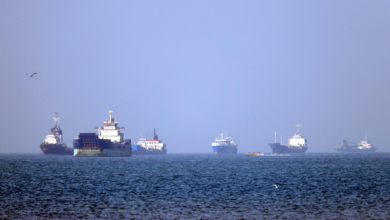
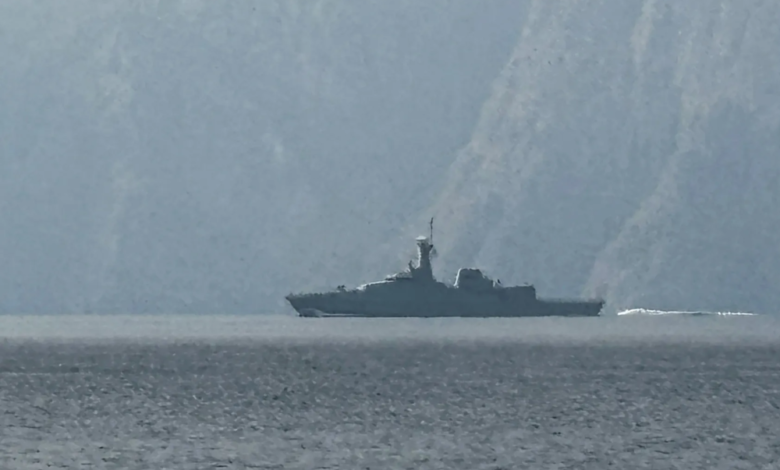
In a significant development reflecting growing international concern for the security of waterways, a US official told Axios that several US Navy ships successfully transited the Strait of Hormuz on Saturday. The official emphasized that this strategic operation focused primarily on reaffirming the principle of freedom of navigation in international waters, a principle long championed by the United States and its allies in this vital region of the world. Informed sources indicate that the core objective of this military action is to bolster the confidence of commercial vessels and oil tankers in safe passage, particularly given the escalating regional tensions. These naval movements coincided with the commencement of peace talks between the parties involved in Pakistan, adding a complex diplomatic dimension to the regional landscape.
Iranian denial and Trump's controversial statements
On the other hand, in a move reflecting the sharp divergence in narratives between Washington and Tehran, Reuters quoted a high-ranking Iranian military official categorically denying that any US warship had transited the Strait of Hormuz during the aforementioned period. This conflicting statement highlights the ongoing information war and psychological tension between the two countries. In a related development, US President Donald Trump posted a striking tweet earlier today, stating: “We are now beginning the process of cleaning up the Strait of Hormuz as a service to all nations of the world, including China, Japan, South Korea, France, Germany, and many more.” This statement underscores the paramount importance that successive US administrations have placed on the security of this strategic waterway.
The strategic and historical importance of the Strait of Hormuz
To understand the dimensions of this event, one must consider the historical background and geopolitical importance of the Strait of Hormuz. Connecting the Persian Gulf, the Gulf of Oman, and the Arabian Sea, the strait is one of the world's most vital and sensitive waterways. Historically, it has been the scene of numerous maritime tensions and skirmishes, as approximately one-fifth of the world's crude oil production passes through it, making it a vital artery for the global economy. Any threat to or closure of this waterway, even for a short period, would trigger a massive shock in global energy markets and an unprecedented surge in oil prices, which explains the intense international interest in its protection.
Expected impact at the regional and international levels
This development is expected to have tangible repercussions on several levels. Locally and regionally, the US naval presence sends a reassuring message to Washington's allies in the Arabian Gulf region, underscoring its commitment to ensuring maritime security. Internationally, securing the Strait of Hormuz is a vital interest for major powers that rely almost entirely on energy imports from the Middle East, such as China and Japan. The continued and safe flow of oil and liquefied natural gas through this strait guarantees the stability of global industry and trade. Therefore, any military actions are being closely scrutinized internationally, and their consequences are being carefully calculated to avoid any escalation that could harm the interconnected global economy.