
Global markets rebound and investor optimism
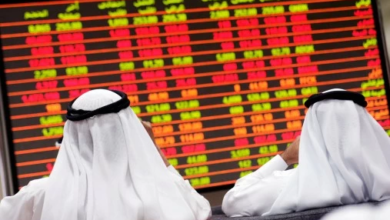
Most European and Asian stock markets saw significant gains in trading on Wednesday, driven by a substantial improvement in global investor confidence. This notable rebound followed statements by US President Donald Trump indicating that the United States might end the tension and conflict with Iran in the near future. These statements sent positive signals to markets that had been cautiously monitoring the geopolitical situation in the Middle East and its potential impact on the global economy.
Exceptional gains for aviation sector stocks
In a related development, shares of American and European airlines surged during trading today. This strong rally followed the US president's hint that a comprehensive solution to the Iranian crisis could be reached within two to three weeks. This announcement instilled hope in investors in the travel and tourism sector, leading to a significant gain of approximately 5% in US airline stocks during a single session.
Historically, the aviation sector has been one of the most sensitive to geopolitical tensions, particularly in the oil-rich Middle East. Any military escalation typically leads to airspace closures, forcing airlines to take longer and more expensive alternative routes. Furthermore, de-escalation means more stable oil prices, and consequently, more stable jet fuel costs, which represent the largest financial burden on these companies' operating budgets.
Exceptional performance by Asian and European stock exchanges
In Asian markets, the broader Asia-Pacific index (excluding Japan) jumped by more than 4.7%, marking its biggest daily gain since November 2022. The significance of this surge stems from the fact that major Asian economies are heavily reliant on energy imports from the Arabian Gulf region. Consequently, any signs of improved security translate into immediate economic recovery and an influx of liquidity into stock markets. This trend has also extended to European stock exchanges, which have witnessed increased demand for higher-risk assets.
Safe-haven movements: gold and the dollar
In the commodities and currency markets, gold prices rose slightly to their highest level in nearly two weeks. This increase was primarily driven by the decline in the value of the US dollar. As the dollar's previous gains, fueled by its status as a safe-haven asset during times of crisis, faded, investors began diversifying their portfolios. It is a well-established economic principle that a weaker dollar makes gold, which is priced in dollars, less expensive for investors holding other currencies, thus supporting its price in global markets.
Expected impact on regional and international economies
The easing of geopolitical tensions has significant economic implications. Regionally, it contributes to greater stability in navigation through vital waterways through which a large portion of the world's oil supply passes. Internationally, stable energy prices prevent new waves of inflation in the global economy, giving central banks more room to implement monetary policies that support economic growth and stimulate investment.