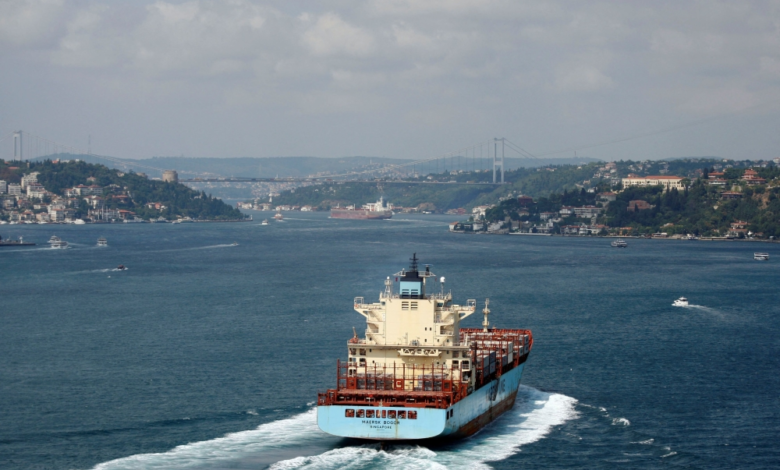
Ship breakdown in the Bosphorus Strait halts navigation... repercussions and details

Turkish authorities, represented by the Coast Guard, announced the complete suspension of maritime traffic in the Bosphorus Strait in both directions after a cargo ship suffered a sudden mechanical failure while transiting the vital waterway. The ship, identified as the Zalturn, is a bulk carrier en route from Egypt to Russia.
According to an official statement from the Turkish Coast Guard, the vessel Zaltorn experienced engine trouble off the coast of the Kuruçeşme district on the European side of Istanbul, rendering it unable to maneuver and causing it to stall in the waterway. Specialized tugboats were immediately dispatched to the vessel's location to provide assistance and secure it, with the aim of towing it to a safe area and resuming navigation as soon as possible.
The strategic importance of the Bosphorus Strait
The Bosphorus Strait is one of the world's most important waterways, not only for Turkey but for global trade as a whole. Together with the Dardanelles Strait and the Sea of Marmara, it forms the only link between the Black Sea and the Mediterranean Sea, making it a vital artery for transporting goods, especially grain, oil, and minerals, from Russia, Ukraine, and other Black Sea countries to global markets. Tens of thousands of ships, from giant oil tankers to container ships and small fishing vessels, pass through the strait annually, making it one of the busiest and most dangerous waterways in the world.
Potential effects of the accident
Any disruption to shipping traffic through the Bosphorus, even a temporary one, can have significant economic repercussions. Locally, the suspension affects ferry services that transport millions of passengers daily between the Asian and European sides of Istanbul. Regionally and internationally, delays in the passage of commercial vessels lead to congestion at the strait's entrances, causing disruptions to global supply chains and shipping schedules. Such incidents highlight the vulnerability of key maritime chokepoints and their direct impact on commodity prices and shipping costs worldwide.
Historical background and navigation organization
Navigation through the Turkish Straits (the Bosphorus and the Dardanelles) is governed by the 1936 Montreux Convention, which guarantees the free passage of merchant ships in peacetime. However, the Convention grants Turkey full sovereignty over the Straits, including the right to regulate traffic and enforce safety and security regulations. Given the Strait's geographical nature—its narrow course, sharp bends, and strong currents—disruptions or groundings pose a constant threat, not only to navigation but also to Istanbul, through which the Strait flows. This makes a swift response from Turkish authorities crucial to preventing potential environmental or human disasters.