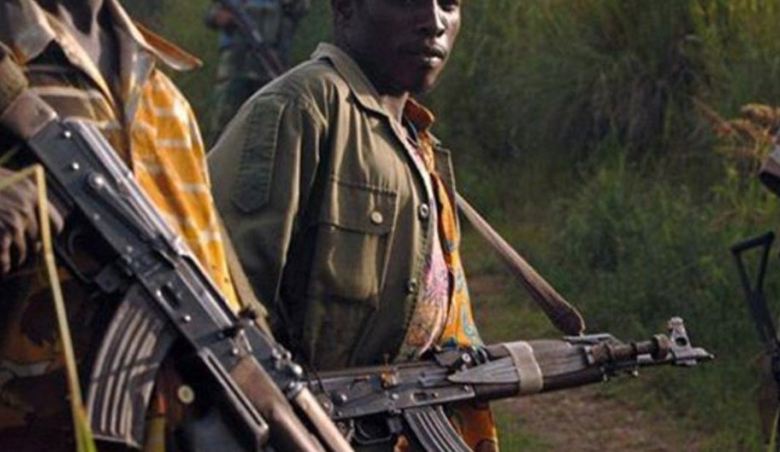

In a serious escalation of security incidents, the Congolese armed forces announced a terrorist attack in the Democratic Republic of Congo that left at least 43 people dead. The horrific massacre occurred on Wednesday in the town of Bofakwa, located in the northeastern Ituri province. Army spokesman Jules Tchikudi Ngongo stated on Thursday that "the toll is 43 of our citizens killed," pointing the finger at the Allied Democratic Forces (ADF), an armed group that has pledged allegiance to the Islamic State (ISIS) terrorist organization.
Historical background of the Allied Democratic Forces
The Allied Democratic Forces (ADF) is one of the deadliest armed groups in eastern Democratic Republic of Congo. Originally founded in Uganda in the 1990s as an opposition movement, it quickly moved into the dense forests of eastern Congo to escape persecution. Over the years, the group has transformed from a political insurgency into an extremist organization, and in 2019, ISIS claimed responsibility for some of the group's attacks, referring to it as its "Central Africa Province." Since then, the violence has escalated significantly, with the group targeting unarmed civilians and remote villages using brutal tactics including murder, arson, and abduction.
The general context of the crisis in eastern Congo
Eastern Democratic Republic of Congo, particularly the provinces of Ituri, North Kivu, and South Kivu, has suffered from chronic insecurity for over two decades. This mineral-rich region is home to dozens of local and foreign militias and armed groups vying for influence and control over gold, cobalt, and other resources. This ongoing conflict has led to one of the world's worst humanitarian crises, displacing millions from their homes and leaving a large portion of the population dependent on international humanitarian aid for survival.
Impact of the attack at the local and regional levels
This latest terrorist attack has serious repercussions at both the local and regional levels. Locally, it exacerbates the fear and despair among civilians who feel abandoned by the international community, and it increases the number of internally displaced persons, placing immense pressure on fragile infrastructure and overcrowded camps. Regionally, the activities of the Allied Democratic Forces (ADF) are causing considerable concern among neighboring countries, particularly Uganda, which has launched joint military operations with the Congolese army to try to eliminate the group and secure their shared border.
International repercussions and the future of stability
Internationally, this attack underscores once again the challenges facing the United Nations Organization Stabilization Mission in the Democratic Republic of the Congo (MONUSCO), one of the world's largest peacekeeping missions. International pressure is mounting for a lasting solution to the security crisis in the region, with calls to strengthen the Congolese army and cut off funding to terrorist groups. The continuation of these attacks not only threatens the stability of the Congo but also represents a potential flashpoint that could engulf the entire African Great Lakes region.