

As part of the comprehensive digital transformation underway in the Kingdom of Saudi Arabia to achieve the goals of Vision 2030, the Ministry of Interior, through its leading electronic platform “Absher,” continues to provide innovative technological solutions aimed at facilitating the lives of citizens and residents. Historically, traffic procedures related to vehicles and license plates required frequent field visits to traffic departments, which consumed considerable time and effort and caused congestion at government offices. Today, thanks to the advanced digital infrastructure, these procedures have been transformed into integrated electronic services that can be completed anytime, anywhere.
stands out The digital vehicle license plate wallet as one of the most prominent of these developments. The significance of this technological advancement lies in its direct local impact by eliminating bureaucracy, enhancing security and reliability in ownership transfers, and reducing fraud. Regionally, these steps reinforce the Kingdom's position as a leading example in implementing the concept of smart e-government. They also have an indirect positive impact on environmental sustainability by reducing reliance on paper transactions and minimizing carbon emissions from users' commutes.
Key services of the digital vehicle license plate wallet
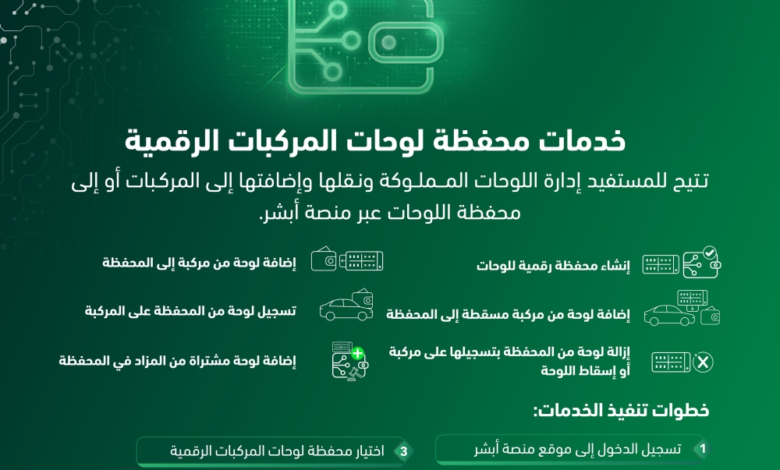
The Absher platform allows users to easily manage, transfer, and add owned license plates to vehicles or to their license plate portfolio. Key services include:
- Create a digital wallet for the paintings.
- Add a license plate from a vehicle to the wallet.
- Add a license plate from a dropped vehicle to the wallet.
- Register a license plate from the wallet on the vehicle.
- Removing a license plate from the wallet by registering it on a vehicle or dropping the plate.
- Add a painting purchased at auction to the wallet.
Steps to implement wallet services:
- Log in to the Absher electronic platform website.
- Select the “Vehicles” section.
- Select “Digital Vehicle Plate Wallet”.
- Choose any of the required wallet services and follow the instructions.
Replace your vehicle's damaged license plate electronically
In addition to managing the wallet, the Absher platform provides an electronic service that enables the vehicle owner to submit a request to exchange vehicle plates between his vehicles, or to exchange the plate with another plate for a vehicle owned by another person, with the possibility of reviewing the details of previous requests.
How to benefit from the motherboard replacement service:
- Log in to the Absher platform.
- Select “My Vehicles” and specify the vehicle in question.
- Select the “Plate Replacement” service and specify the type of replacement required.
- Confirm the entered beneficiary data.
- Pay the service fees and delivery charges through the available payment channels.
- The beneficiary receives a text message to confirm the payment process.
- After completing all the steps and paying the government fees, the beneficiary waits until they receive a message from the postal carrier to deliver the new plate.
Vehicle sales service via the Absher platform
To enhance financial and legal security in the automotive market, Absher offers the "Vehicle Sales" service, which guarantees the rights of both the seller and the buyer. The buyer can complete the service by following these steps:
- Open the Absher application and select “My Services” from the main menu.
- Select “Vehicle Ownership Management”.
- Select “Required Sale Request”.
- Review the details and accept the application if approved.
- Enter your bank account information, then the location information where the vehicle will be delivered (e.g., city and address).
- Carefully review the vehicle information and selling price before confirming acceptance.
- If you accept the request, you will be provided with a virtual account number for the transaction to ensure the security of the funds.
- Transfer the amount agreed upon with the seller to the transaction's virtual account via the bank.
- After the amount is deposited, both parties will be notified of the need to meet and inspect the vehicle on the ground.
- Finally, the handover and transfer of ownership process is completed via the Absher application, through the buyer sharing the “confirmation code” with the seller to officially finalize the procedures.
The continued expansion of Absher platform services reflects the commitment of the relevant authorities to provide a safe and efficient digital environment, which contributes to raising the quality of life and facilitating daily procedures for all residents of the Kingdom.