Trump is considering punishing NATO countries for not supporting him in a war with Iran

Firm American stance towards NATO allies
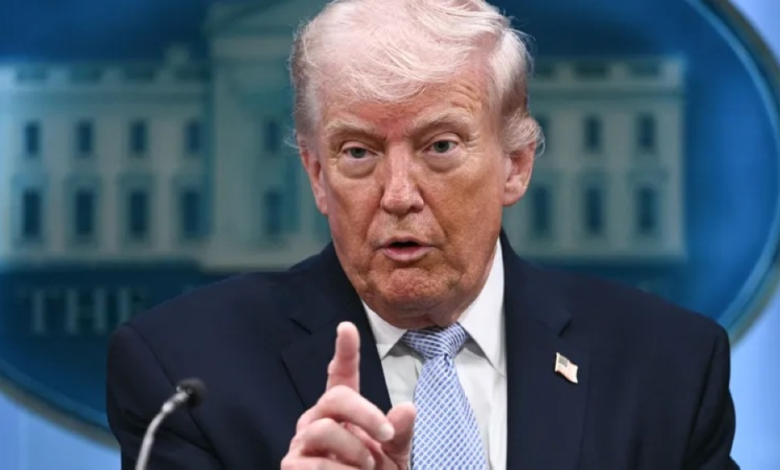
In a significant geopolitical development reflecting escalating international tensions, American media reports have revealed new and assertive stances from President Donald Trump's administration toward Western allies. The Wall Street Journal reported that President Trump is seriously considering imposing sanctions on some NATO countries for failing to provide sufficient support to the United States in military operations, or what is known as the "war with Iran." This position highlights the radical shifts in American foreign policy and the extent to which traditional alliances are tied to Washington's immediate interests.
Details of potential sanctions and military base closures
Al Arabiya, via its official X platform, provided further details on the Wall Street Journal report, indicating that the US administration is planning to take practical and decisive steps. Among these steps is the withdrawal of US forces stationed in several NATO member states. The threats are not limited to personnel withdrawals but extend to the closure of strategic US military bases in Europe. It is anticipated that the closures could target a major base in Spain or Germany, representing a significant blow to European security infrastructure, which relies heavily on the US military presence.
Wall Street Journal: Trump is considering punishing some NATO countries for not supporting a war in Iran #AlArabiya_Breaking— Al Arabiya Breaking (@AlArabiya_Brk) April 8, 2026
The historical context of Trump's relationship with NATO
Historically, President Donald Trump's relationship with NATO has been fraught with tension. During his first term, Trump repeatedly and sharply criticized member states, demanding they increase their defense spending to the agreed target of 2% of GDP. He consistently championed the "America First" principle, arguing that the United States bears the brunt of Europe's defense costs. These latest threats to punish NATO members are a natural extension of his past policies, but this time they are linked to the highly sensitive issue of the conflict with Iran, presenting European allies with a difficult dilemma: maintaining their foreign policy independence while simultaneously meeting Washington's security demands.
High-level US-China talks on Iran
On another front related to the Iranian issue, Washington is seeking to utilize all available diplomatic and political leverage. In this context, the White House announced on Wednesday that it had held high-level talks with the People's Republic of China to discuss developments concerning Iran. White House spokeswoman Caroline Leavitt told reporters, "With regard to China, there were high-level talks between our government and the Chinese government." These talks are of paramount importance given the close economic and political ties between Beijing and Tehran, particularly in the area of energy imports, which makes the Chinese position crucial in any international equation concerning the Iranian issue.
Expected repercussions on the international and regional landscape
These developments are expected to have profound repercussions on both the regional and international stages. At the European level, the threat of troop withdrawals and base closures could accelerate the European Union's efforts to build an independent defense force outside the American umbrella, potentially reshaping transatlantic alliances forever. In the Middle East, American pressure on allies to intervene or support a stance against Iran could lead to sharp international polarization, further complicating the region's security landscape. Meanwhile, talks with China reflect an American recognition that containing Iranian threats requires consensus, or at least an understanding, with rival great powers, opening the door to major geopolitical compromises that could redraw the map of global influence.