Trump and Iran: Details of the maximum pressure policy and conditions for negotiations

Trump's decisive statements regarding Iran
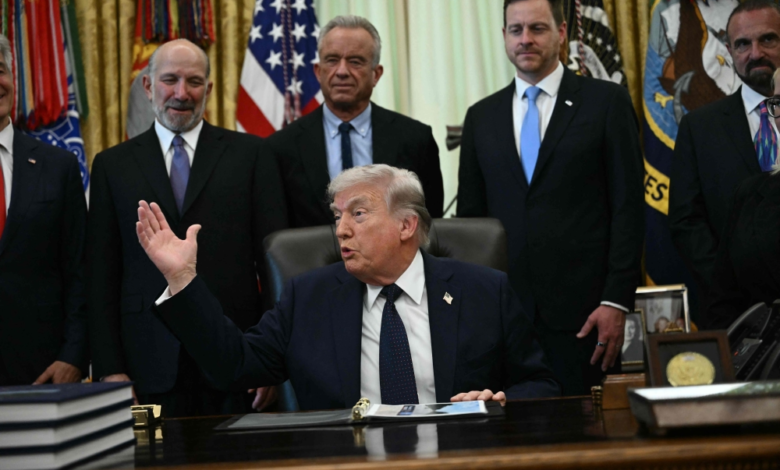
Former US President Donald Trump reiterated his hardline stance toward Iran, noting that diplomatic contacts, including phone calls, are ongoing, but stressed that any future agreement must definitively guarantee that Tehran will not acquire nuclear weapons. Trump explained that his administration prefers direct, face-to-face negotiations to reach a comprehensive deal, but stipulated that Iran must "surrender" to pressure and accept conditions that prevent it from developing its nuclear capabilities.
Trump indicated that his administration's "maximum pressure" policy had severely damaged the Iranian economy, asserting that the Iranian currency had collapsed and Tehran's military capabilities, particularly in the area of ballistic missiles, had been significantly weakened. He added that this policy aimed to force the Iranian regime back to the negotiating table to reach a new, more stringent and comprehensive agreement.
Background to the tension: From the nuclear agreement to the maximum pressure policy
The roots of the current tension can be traced back to 2018, when President Trump announced the United States' withdrawal from the Joint Comprehensive Plan of Action (JCPOA), commonly known as the "Iran nuclear deal," which was signed in 2015 between Iran and the P5+1 group of nations. Trump justified his decision by claiming the agreement was "disastrous" and contained "fundamental flaws," such as its failure to address Iran's ballistic missile program and its support for armed groups in the Middle East, as well as the "sunset clauses" that would allow Iran to resume certain nuclear activities after the agreement's expiration.
Following the withdrawal, Washington reimposed harsh economic sanctions on Tehran, targeting vital sectors such as oil and banking, as part of a campaign dubbed “maximum pressure.” This campaign aimed to cripple the Iranian economy and reduce its revenues, thereby limiting its ability to finance its regional activities and forcing it to negotiate a new agreement that would meet American demands.
Regional and international importance and impacts
Trump's policy toward Iran had far-reaching consequences at the domestic, regional, and international levels. Domestically, in Iran, the sanctions led to a severe economic crisis, including unprecedented inflation and a collapse in the value of the local currency, impacting the daily lives of citizens. Regionally, this policy exacerbated tensions in the Gulf region, which witnessed attacks on oil tankers and vital infrastructure, raising the level of security risks.
Internationally, the US withdrawal decision created a rift in relations between the United States and its European allies (Britain, France, and Germany), who were signatories to the agreement and had worked hard to preserve it. In contrast, Trump's policy received strong support from Washington's allies in the Middle East, such as Israel and Saudi Arabia, which share the United States' concerns about Iran's nuclear ambitions and its regional role. Trump also cited his conversations with international leaders, such as Russian President Vladimir Putin, emphasizing the international interest in preventing Iran from acquiring a nuclear weapon, reflecting the significant geopolitical importance of this issue.