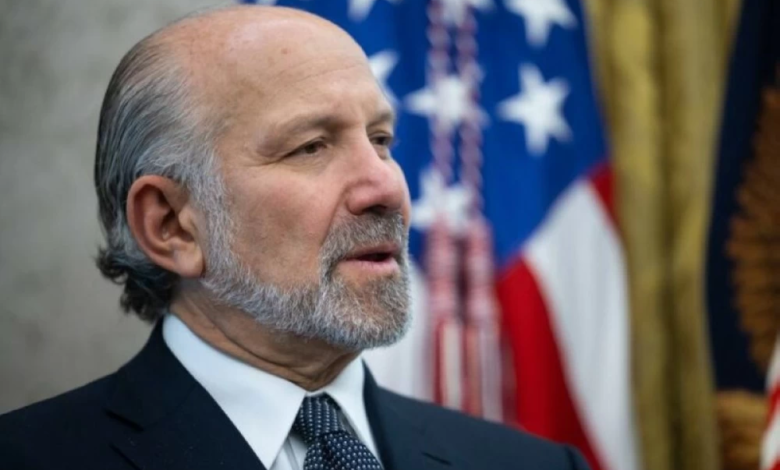

U.S. Commerce Secretary Howard Lutenick asserted that the current levels of the U.S. dollar, which tend to be relatively low, are putting the economy on a "more normal" path, directly contributing to boosting U.S. exports and supporting economic growth rates, and pointing to a new era of trade policies aimed at correcting past imbalances.
In his recent remarks, Lutnick explained that the dollar's value had been artificially inflated for years due to the practices of other countries that manipulated their exchange rates to keep the dollar strong, giving their exports an unfair advantage in the US market. He indicated that this new approach would allow American products to compete more effectively in global markets.
Optimistic forecasts for economic growth
In reviewing future indicators, Lutnick revealed ambitious economic forecasts, predicting that US GDP growth would exceed 5% during the fourth quarter of 2025. The optimism did not stop there, as he predicted that growth would surpass 6% in the first quarter of 2026, driven by increased industrial production and active export activity.
The "strong dollar" debate: between politics and reality
These statements come at a sensitive time, amidst conflicting economic visions within the US administration. US Treasury Secretary Scott Bessent indicated that President Donald Trump still fundamentally adheres to a "strong dollar" policy, but with a different focus on the attractiveness of dollar-denominated assets for investment.
When asked about the apparent contradiction between the "strong dollar" policy and Trump's recent praise of the currency's decline as "great," Bisent explained that the core of the policy is to "create a supportive environment" for the currency, so that its price reflects the true strength of the economy and not the result of speculation or foreign intervention. He emphasized that the administration is taking steps to make investing in the United States more attractive, which supports the currency in an organic and healthy way.
Historical background and global influences
Historically, the United States has pursued a strong dollar policy since the 1990s as a means of curbing inflation and attracting foreign capital. However, the shift toward accepting a weaker dollar reflects a strategic change aimed at supporting the domestic manufacturing sector and reducing the trade deficit, a key pillar of President Trump's "America First" economic policies.
This trend is expected to have far-reaching effects on the global economy; a weaker dollar makes American goods cheaper for foreign buyers, putting pressure on major exporting countries like China and the European Union, whose products may find themselves less competitive in the US market. This shift could reshape the landscape of international trade, as Washington seeks to regain its share of global markets through currency.