
Tensions escalate and the largest mass exodus from Tehran
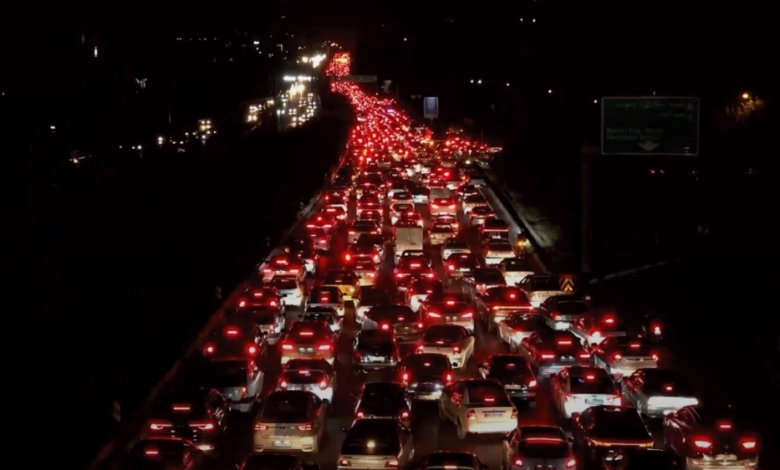
The Iranian capital, Tehran, is experiencing unprecedented anticipation and anxiety as it witnesses the largest wave of mass displacement towards the northern provinces since the outbreak of the recent war. According to reports carried by Al Arabiya via its X platform, citing The New York Times, hundreds of thousands of residents have left their homes seeking refuge in the northern cities bordering the Caspian Sea. These areas are geographically less vulnerable to direct military targeting due to their complex mountainous terrain, making them the primary destination for those fleeing the potential escalation of violence.
Trump's threats: a final warning and fears of widespread destruction
In a dangerous escalation of events, US President Donald Trump issued a stark warning to the Iranian leadership, threatening what he called the “death of an entire civilization” if Tehran did not comply with US demands to end the war. In a tweet posted on his Truth Social platform, Trump asserted that refusing to heed the ultimatum would have dire consequences, stating: “An entire civilization will die tonight, never to return. I don’t want it, but it probably will.” This statement reflects the “maximum pressure” policy that the US administration has long pursued in its dealings with Iran to deter any actions that threaten Western interests.
The strategic importance of the Strait of Hormuz crisis
At the heart of this escalation lies Iran's closure of the Strait of Hormuz, one of the world's most strategically important waterways. More than a fifth of the world's oil supply passes through this narrow strait, making any disruption to shipping a direct threat to global economic security. Trump has set a deadline of midnight Tuesday (GMT) for the strait to be reopened, warning that continued closure will be met with an overwhelming military response aimed at protecting global energy supply lines.
Targeting infrastructure and the repercussions of refusing a ceasefire
The American threats were not limited to public statements, but included an explicit threat to destroy Iran's civilian and military infrastructure. Trump had previously indicated that the US military might target vital bridges, power plants, and other essential facilities, even to the point of "completely destroying" them, if no agreement was reached. In a related development, the US administration rejected proposals for a temporary ceasefire, deeming them "insufficient" and demanding fundamental solutions that would guarantee freedom of international navigation.
Expected impact locally and internationally
Domestically, this mass exodus is placing immense pressure on the infrastructure of Iran's northern provinces, which already face economic challenges in absorbing such a large number of displaced people. Regionally and internationally, a full-scale military confrontation would inevitably destabilize the entire Middle East, potentially driving global oil prices to record highs and threatening to plunge the global economy into a genuine crisis. The world is now holding its breath, awaiting developments in the coming hours as the US deadline approaches.