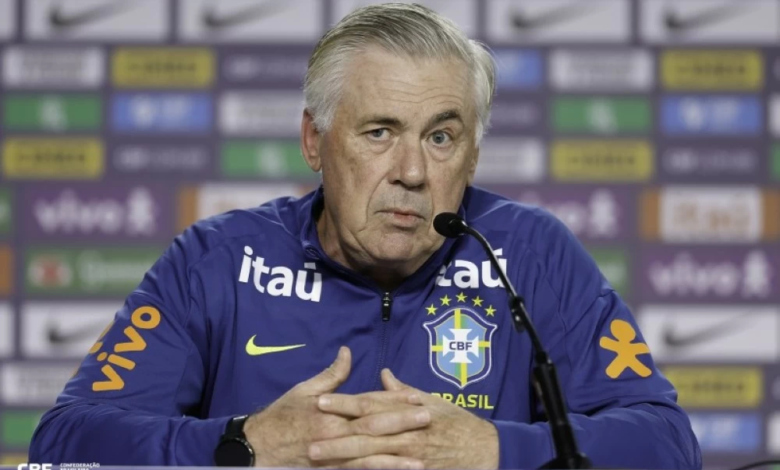

In a scene that blended the exuberant celebrations with the unquenchable passion for football in the land of samba, the presence of veteran Italian coach Carlo Ancelotti at the Salvador Carnival in Bahia transformed into a sporting event of the highest order. Ancelotti was not merely a guest of honor enjoying the festivities; he found himself at the heart of the action when renowned Brazilian singer Leo Santana his presence to deliver a direct message representing a broad segment of the Brazilian public.
Details of the dialogue in the heart of the carnival
During his performance on stage, Santana paused his singing to warmly welcome the Italian coach, praising his illustrious coaching career and extensive history in European football. The Brazilian artist considered Ancelotti's presence at the helm of the Seleção a "qualitative addition" that would restore hope to the fans, who were eager for titles. However, the welcome quickly turned into a specific technical request, as Santana addressed the coach in a friendly but firm manner: "We trust you to bring us the sixth star, but please, call up Neymar.".
The "Hexa" dream and historical pressures
This spontaneous reaction reflects the immense pressure placed on any coach who takes charge of the Brazilian national team. Since their last World Cup victory in 2002, Brazil has been waiting for their sixth title (the Hexa). Fans see Ancelotti, with his tactical expertise and ability to manage star players, as the savior capable of breaking this two-decade-long drought. The integration of football culture with the popular celebrations of Carnival underscores that in Brazil, football is not just a sport, but an integral part of the national identity.
The Neymar dilemma: between talent and injuries
wasn't Neymar da Silva merely a personal wish; it reflected a debate raging in Brazilian football circles. Despite Neymar being the national team's all-time leading scorer, his career has been marred by numerous injuries and controversies. Supporters like Santana believe Neymar's exceptional talent is indispensable for making a difference in big matches, while others favor bringing in fresh talent. The singer's request presents Ancelotti with the challenge of balancing public sentiment with the players' technical and physical capabilities.
Ancelotti's diplomatic response
As usual, Carlo Ancelotti handled the situation with remarkable composure. The Italian coach refrained from making any firm promises, offering only a brief smile and a diplomatic reply: "Thank you for the advice." This response reflects Ancelotti's leadership style, which prefers to work quietly, away from media and public pressure, keeping his tactical decisions to himself.
It is worth noting that Ancelotti's presence at the carnival and his meeting with a number of former Brazilian legends who won the World Cup comes as part of his efforts to integrate into Brazilian culture and understand the mentality of the players and fans up close, a necessary step for any foreign coach seeking success in the world's most football-mad country.