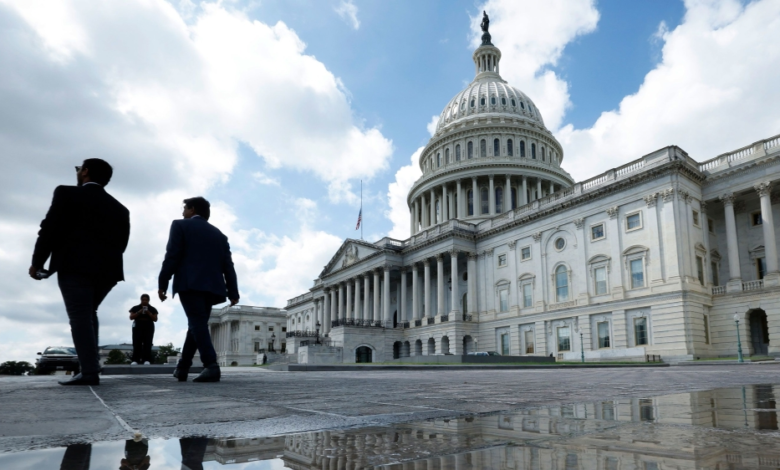

In a move that ended a partial shutdown of government agencies, the US Congress reached an agreement to end the longest government shutdown in US history, which lasted for 35 days from December 22, 2018 to January 25, 2019. This decision came after a sharp political confrontation between former President Donald Trump and Congress, which led to the suspension of work in many federal agencies and affected the lives of hundreds of thousands of employees.
Background to the crisis: Dispute over funding for the border wall
The root cause of the government shutdown was a deep disagreement over the federal budget, specifically then-President Donald Trump's insistence on including $5.7 billion to fund the construction of a wall along the U.S.-Mexico border. This wall was one of his key campaign promises, but it faced fierce opposition from the Democratic Party, which controlled the House of Representatives. Democrats refused to allocate this amount, arguing that the wall was an ineffective and costly solution for border security. This led to a deadlock in negotiations, and Congress failed to pass a spending bill before the deadline.
The economic and social repercussions of the lockdown
The government shutdown had a wide-ranging impact on the American economy and society. Nearly 800,000 federal employees were forced to either take unpaid leave or work without receiving their salaries on time. This included employees in critical sectors such as the Transportation Security Administration (TSA) at airports, the Coast Guard, and National Park Service personnel.
On the economic front, the Congressional Budget Office (CBO) estimated that the shutdown cost the U.S. economy approximately $11 billion, including $3 billion in permanent losses that will not be recovered. The shutdown also impacted public services, with some food safety inspections halted, loan approvals delayed, and museums and national parks closed, harming the local tourism sector.
End of the crisis and a temporary solution
Following mounting public pressure and increasing disruptions to government services, particularly at airports, President Trump agreed on January 25, 2019, to sign a bill to fund the government for three weeks, allowing federal agencies to reopen and employees to resume receiving their paychecks. This temporary agreement did not include funding for the border wall but opened the door for a bipartisan congressional committee to negotiate a long-term solution for border security. Although the shutdown ended, the underlying political disagreement remained, reflecting the deep polarization of American politics and its direct impact on the stability of government operations.