
Urgent alerts from the National Center for Meteorology
The National Center for Meteorology issued a detailed report on the weather conditions in Saudi Arabia, warning of significant weather fluctuations, including dense fog and rainfall in scattered areas across the country. These warnings come as part of the relevant authorities' commitment to the safety of citizens and residents, especially given the climatic changes the region is experiencing during this time of year, which necessitate taking maximum precautions.
Areas with widespread fog and reduced visibility
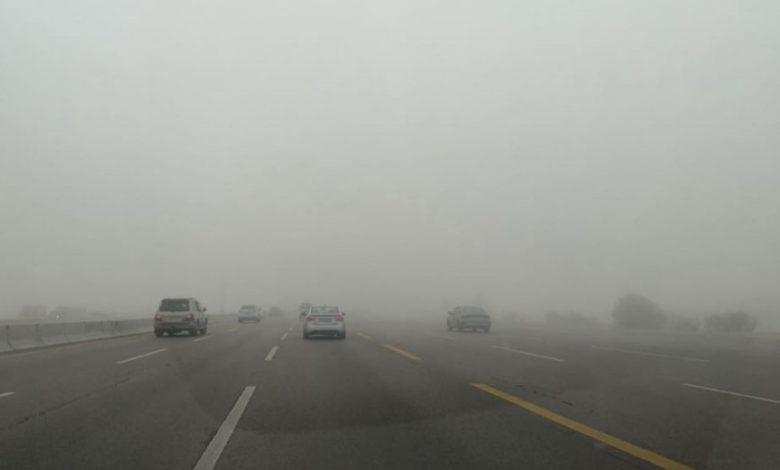
The report indicated that three main regions will experience a wave of dense fog leading to near-zero horizontal visibility, with visibility dropping to between one and three kilometers. This weather condition is expected to persist until 8:00 AM. The affected areas include the Asir region, specifically the cities and governorates of Abha, Ahad Rafidah, Khamis Mushait, Al Namas, Balqarn, Tanomah, Al Harjah, Al Rabwah, Al Farshah, Sarat Abidah, and Dhahran Al Janoub. The fog also extends to the Al Baha region, specifically Al Qura, Al Mandaq, Al Baha, Baljurashi, and Bani Hassan. In the Jazan region, the governorates of Al Harth, Al Dayer, Al Reeth, Al Aridhah, Al Aydabi, Fifa, and Haroub will be affected.
Thunderstorms in the Eastern Province
Separately, the National Center for Meteorology warned of light to moderate rainfall expected in parts of the Eastern Province during the early morning hours of Thursday. This rainy weather is expected to begin at 1:00 AM in the governorates of Khafji and Hafr Al-Batin, and at 3:00 AM in Al-Nu'ayriyah and Qaryat Al-Ulya, with its effects continuing until 11:00 AM in all these locations. The rain will be accompanied by brisk winds, reduced horizontal visibility, and the possibility of thunderstorms.
The geographical and climatic context of the Kingdom
Historically, Saudi Arabia has been characterized by significant geographical and climatic diversity. The southwestern highlands, such as Asir, Al-Baha, and Jazan, experience higher humidity levels and frequent fog formation, especially during seasonal transitions and temperature fluctuations. In contrast, the eastern and northern regions are affected by the extension of low-pressure systems that bring rain. The National Center of Meteorology was established to serve as the official body for monitoring these changes. It plays a vital and historic role in providing accurate and early weather forecasts that contribute to protecting lives and property, and it represents a continuation of the Kingdom's decades-long efforts to develop its meteorological and early warning systems.
The impact of weather conditions and the importance of warnings
These weather alerts are of paramount importance locally, as they directly impact traffic flow, particularly during the morning rush hour when students are heading to school and employees are going to work. They also have a positive effect on the agricultural sector in the southern highlands, which relies on these weather patterns. At the national level, the accuracy of these alerts reflects the advanced meteorological infrastructure in the Kingdom, enhancing the ability of relevant authorities, such as Civil Defense and Highway Patrol, to manage crises and provide proactive guidance to the public to avoid traffic accidents caused by poor visibility or slippery conditions due to rain.
Traffic safety guidelines
In this context, the General Directorate of Civil Defense and traffic authorities always stress the need to take precautions, adhere to traffic instructions, avoid speeding, use fog lights, leave a sufficient safety distance between vehicles, and stay away from flood channels and valleys during rainfall, to ensure everyone’s safety until the weather stabilizes and things return to normal.