Saudi Arabia Trading: Foreign Individual Sales and Institutional Purchases

Saudi Arabia Trading Report: Mixed Performance of Foreign and Local Investors
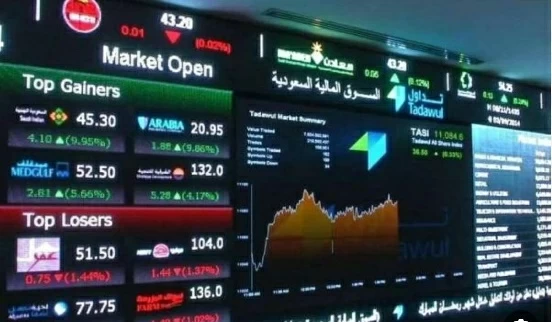
The latest weekly report issued by Tadawul Saudi Arabia, which highlights ownership value and trading value in the stock market, revealed notable movements in investor behavior during the week ending March 26, 2026. Trading during this week was limited to only three sessions due to the Eid al-Fitr holiday, but it witnessed investment activity that reflects the dynamism of the Saudi financial market and its ability to attract liquidity.
Foreign individual sales versus institutional purchases
Official data revealed that net sales by foreign retail investors in the main market reached approximately SAR 980 million. Notably, this investor category did not record any purchases during the three trading sessions, indicating a clear trend towards portfolio liquidation or profit-taking before the Eid holiday break. Conversely, foreign institutions demonstrated strong and continued confidence in the Saudi economy, with net purchases amounting to around SAR 1.1 billion, representing 52.1% of total market purchases and 46.6% of total sales.
Local support: companies, funds, and government agencies
Positive activity was not limited to foreign institutions; it extended to local entities that played a pivotal role in maintaining market equilibrium. Saudi companies recorded net purchases of approximately SAR 196.6 million. Investment funds also registered net purchases of SAR 256 million, while government entities injected strong liquidity with net purchases of SAR 845.8 million, reflecting robust institutional support for financial market stability and strategic investment strategies.
The historical context of the opening of the Saudi stock market
To understand these figures more deeply, it's necessary to consider the historical context of the Saudi stock market's development. Since 2015, the Kingdom has been taking strategic steps to open its financial market to qualified foreign investors (QFIs). These efforts culminated in 2019 with the market's inclusion in global emerging market indices such as MSCI and FTSE Russell. This historic opening explains the massive volume of trading by foreign institutions today, as the Saudi market has become a major destination for global capital seeking safe and attractive investments in the Middle East.
Importance and expected impact on the economy
This disparity in performance between individuals and institutions carries significant economic implications. Domestically, the continued influx of liquidity from government entities and investment funds underscores the resilience of the Saudi economy and its capacity to absorb any significant selling pressure from individuals. Regionally and internationally, the continued injection of billions of riyals by foreign institutions reflects the international investment community's confidence in the objectives of Saudi Vision 2030, which aims to diversify income sources and reduce dependence on oil.
In conclusion, the Saudi stock market demonstrates remarkable resilience and growing investment appeal. Despite the short trading week, the volume of traded liquidity and the activity of major institutions confirm that Saudi Arabia's stock market is steadily progressing towards establishing itself as one of the world's leading financial markets, supported by a robust regulatory environment and a growing national economy.