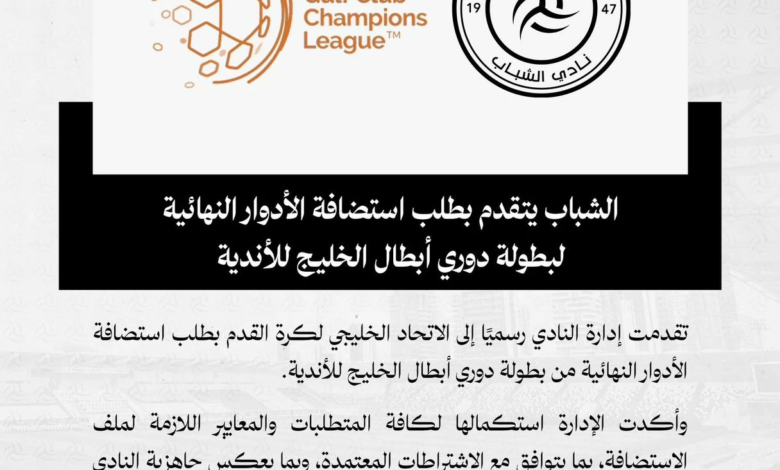

Al Shabab club seeks to host the prominent Gulf event
In a strategic move reflecting the ambitious goals of Saudi sports, Al-Shabab FC officially announced the submission of a comprehensive bid to the Arabian Gulf Cup Football Federation, requesting to host the final stages of the Gulf Champions League. This significant step underscores the Riyadh-based club's desire to strengthen its presence on the regional and continental stage and deliver an exceptional edition worthy of the prestigious tournament's history.
Readiness of infrastructure and sports facilities
In its official statement, the youth administration confirmed that it has fulfilled all the necessary technical and organizational requirements and standards to ensure the success of its hosting bid. This bid fully complies with the stringent requirements adopted by the tournament's organizing body. The club also highlighted the complete readiness of its infrastructure, including its state-of-the-art stadium, one of the most modern sports facilities, along with the availability of all the logistical and organizational resources that will guarantee the comfort of the participating teams and the large crowds expected to attend and support their clubs.
The historical significance of the Gulf Champions League
The Gulf Champions League holds immense historical significance, being one of the oldest and most prestigious tournaments in the region, bringing together the brotherly nations of the Gulf Cooperation Council. Over the decades, this tournament has contributed to the development of Gulf football and the emergence of numerous footballing talents. Hosting these finals presents a golden opportunity to revive the spirit of fair and exciting competition among Gulf clubs, adding a special dimension of excitement to the regional sporting scene and strengthening the fraternal bonds between the peoples of the region.
The impact of hosting the tournament on Saudi sports and Vision 2030
This youth movement cannot be separated from the broader context of the comprehensive sports renaissance that Saudi Arabia is experiencing under Vision 2030. The anticipated hosting of these finals will directly contribute to boosting the local sports economy and revitalizing sports tourism in the capital, Riyadh. Furthermore, the successful organization of this major Gulf event will add another achievement to the Kingdom's impressive record of hosting major regional and international sporting events, further solidifying its position as the sports capital of the Middle East and a globally influential soft power.
Unlimited support from sports leadership
In concluding its efforts, Al Shabab Club's management expressed its sincere gratitude to the supporting entities, most notably the Saudi Ministry of Sport and the Saudi Arabian Football Federation. Their continuous support and keen interest played a pivotal role in strengthening the club's bid to host the tournament and overcoming all obstacles. This combined effort undoubtedly confirms that the Kingdom of Saudi Arabia, represented by Al Shabab Club, is fully prepared to deliver an unprecedented Gulf football experience that will remain etched in the memories of football fans worldwide.