Tensions escalate: Revolutionary Guard warns of a deadly spiral in the Strait of Hormuz

Geopolitical tensions in the Middle East have escalated to unprecedented levels, with Iran's Revolutionary Guard stark warnings to the United States and its allies, threatening them with a "deadly spiral" in the Strait of Hormuz. This dangerous escalation comes amid a complex regional landscape and stalled negotiations.
Iran issues stern warnings and rejects US threats
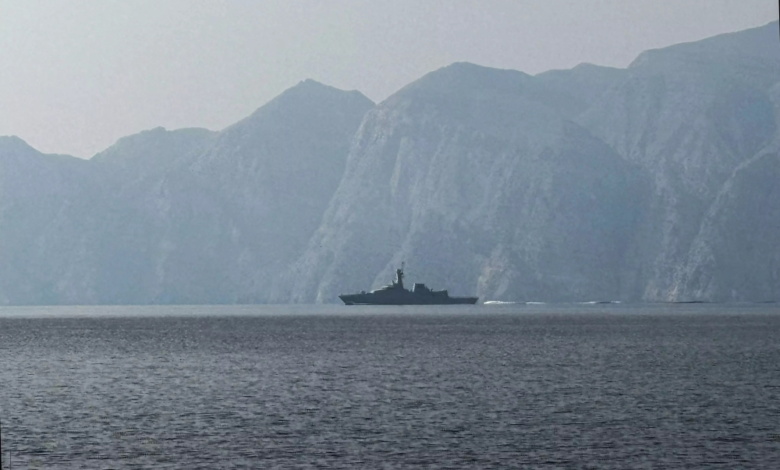
In a related development, the Iranian Revolutionary Guard Corps Navy warned Tehran's adversaries on Sunday against taking any escalatory steps. In a statement published on its "X" platform, it asserted that "the enemy will be caught in a deadly spiral in the Strait of Hormuz if it takes a wrong step," emphasizing that "all maritime traffic is under the complete control of the Iranian armed forces.".
These statements came as a direct response to US President Donald Trump’s that Washington would impose a naval blockade on the strait, which Tehran considers to have been effectively closed since the start of US-Israeli military operations against it.
Official reactions: “Ridiculous” threats
In a related development, Iranian Navy Commander Shahram Irani described the US president's threats to impose a naval blockade on the Strait of Hormuz as "very ridiculous and laughable." Iranian state television quoted him as saying that "the Iranian Navy is monitoring and overseeing all movements of the aggressive US military in the region.".
These statements coincided with the failure of lengthy talks between Tehran and Washington in the Pakistani capital, which aimed to reach an agreement to end the state of war and tension in the Middle East. In this regard, Iranian Parliament Speaker Mohammad Bagher Ghalibaf declared upon his return from Pakistan: “If they fight, we will fight; if they act rationally, we will act rationally. We will not yield to any threat. Let them test our resolve once more so we can teach them an even greater lesson.”.
Historical context and strategic importance of the Strait of Hormuz
To understand the dimensions of this escalation, one must consider the immense geopolitical importance of the Strait of Hormuz. This waterway, connecting the Persian Gulf, the Gulf of Oman, and the Arabian Sea, is one of the world's most critical maritime chokepoints. Approximately one-fifth of the world's oil consumption passes through it, making it a vital artery for global energy.
Historically, controlling the Strait of Hormuz or threatening to close it has always been a key bargaining chip in Iranian military doctrine. Since the "Tanker War" of the 1980s during the Iran-Iraq War, major powers have recognized the sensitivity of this waterway, as any disruption to its maritime security would necessitate immediate international intervention to protect energy supply lines.
The expected repercussions of any military escalation in the strait
Implementing any naval blockade or the outbreak of direct clashes in the Strait of Hormuz would have disastrous consequences on several levels:
- On the international economic front: Any disruption to shipping will lead to an immediate and dramatic surge in oil and liquefied natural gas prices, threatening to ignite a new wave of global inflation that will hit major and emerging economies alike.
- On a regional level: Gulf countries' exports will be directly affected, which could push the region towards a naval arms race and new military alliances to secure alternative routes for energy exports.
- On the geopolitical level: such an event would force other global powers, such as China, which is heavily dependent on Gulf oil, to intervene diplomatically or possibly militarily to protect their interests, thus widening the circle of conflict to include multiple international parties.
Ultimately, the escalating rhetoric between the Iranian Revolutionary Guard and the US administration continues to put the global economy and regional security on the brink, pending the outcome of diplomatic or military moves in the coming days.