
Departure of the US aircraft carrier Gerald Ford
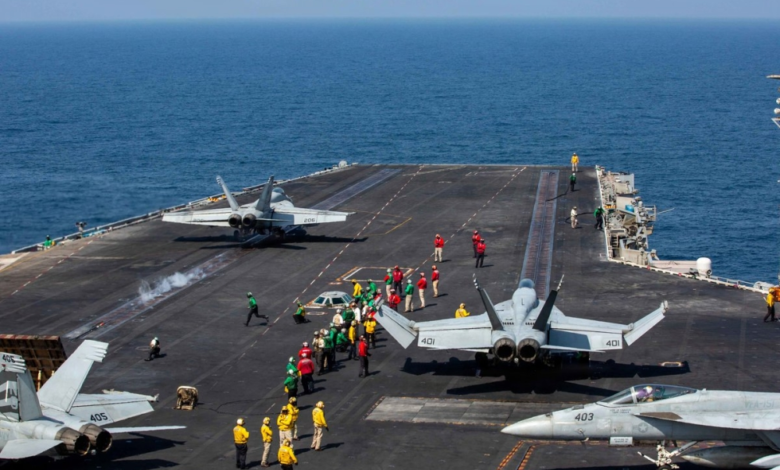
In a significant military development reflecting the rapidly evolving dynamics on the international stage, the US Navy announced on Thursday that the aircraft carrier USS Gerald R. Ford had departed Croatian waters after a five-day stopover, without disclosing its next military or strategic destination. The Navy confirmed that the warship, the world's largest aircraft carrier, had completed a series of critical repairs and received the necessary supplies to resume its operations, emphasizing that it "remains ready to carry out its mission in service of national objectives in any region.".
Technical and logistical challenges and comprehensive reforms
The aircraft carrier faced numerous logistical and technical challenges during its deployment. Among these was a fire on board on March 12, which the U.S. military reported caused significant damage to approximately 100 berths. Additionally, previous media reports indicated that the ship experienced major problems with its sewage and toilet systems while at sea, resulting in blockages and long queues at the restrooms. Despite these obstacles, engineering crews were able to carry out the necessary maintenance to ensure the carrier's return to full operational readiness.
Military context and tensions in the Middle East
These movements follow the carrier's involvement in military operations and heightened regional tensions. It has been linked to the US and Israeli airstrikes on Iranian-linked targets on February 28. This was part of a broader US military buildup in the Middle East, which also included the deployment of the aircraft carrier USS Abraham Lincoln. The USS Gerald Ford's deployment to the Mediterranean and the region lasted approximately nine months, a move intended to bolster the US military presence.
Historical background and strategic importance
Historically, the aircraft carrier USS Gerald R. Ford represents the newest and most advanced generation in the US Navy's arsenal, the flagship of its class designed to succeed the venerable Nimitz-class. This carrier boasts highly advanced technology, most notably its Electromagnetic Aircraft Launch System (EMALS), which gives it a superior ability to launch a greater number of aircraft in record time and with greater efficiency compared to previous generations. Its port call in a NATO ally like Croatia reflects Washington's commitment to strengthening military coordination with its European allies and securing supply lines.
Expected impact regionally and internationally
Regionally and internationally, the deployment of the US aircraft carrier carries profound strategic implications. Amid escalating tensions in the Middle East, the deployment of such a large naval force sends a clear message of deterrence to regional powers, particularly Iran and its proxies, aiming to prevent the region from descending into a full-blown regional conflict. These carriers also play a pivotal role in securing international shipping lanes and protecting global trade from potential threats. Internationally, the continued operational readiness of the USS Gerald R. Ford underscores the United States' determination to maintain its naval supremacy and project military power in global hotspots, thereby safeguarding its national interests and those of its allies.