International warning of nuclear disaster due to attacks near Bushehr power plant

Urgent warning from the International Atomic Energy Agency
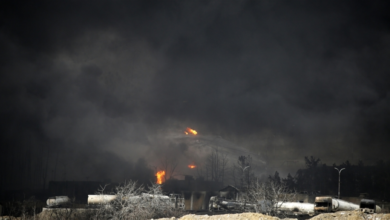
The Director General of the International Atomic Energy Agency (IAEA), Rafael Grossi, issued a strong warning regarding the escalating military attacks near Iran's Bushehr nuclear power plant. In an official statement released on Monday, Grossi emphasized that these attacks pose a real and direct threat to nuclear safety, stressing the need for an immediate halt to all military activities in the vicinity of the facility. He highlighted a particularly alarming detail: one of the recent strikes landed just 75 meters from the plant's outer perimeter wall, raising the specter of a potential catastrophe if this escalation continues.
Risks of a radiological accident and its environmental consequences
In his statement, Grossi explained that continued attacks near the Bushehr nuclear power plant could lead to a serious radiological accident. Such an accident would not only have a limited geographical impact but would also have devastating consequences for civilian lives and the natural environment, both within Iran and in neighboring countries. Any damage to the plant's sensitive infrastructure, such as cooling systems or the reactors themselves, could lead to an uncontrollable radioactive leak, bringing to mind previous nuclear disasters.
Historical context of the Bushehr nuclear power plant
The Bushehr Nuclear Power Plant, located on the eastern coast of the Persian Gulf, is the first civilian nuclear power plant in Iran and the Middle East. Its construction began in the 1970s in cooperation with German companies, but the project was halted following the 1979 Iranian Revolution. Later, Russia resumed work on the project through its state-owned company Rosatom, and the plant was officially commissioned and connected to the Iranian national electricity grid in 2011. The plant is subject to regular monitoring and inspection by the International Atomic Energy Agency (IAEA), making its safety a shared international responsibility.
Regional and international impacts of any potential nuclear leak
International warnings are of paramount importance given the sensitive geographical location of the Bushehr nuclear power plant. Regionally, the plant is situated on the shores of the Arabian Gulf, a vital body of water upon which many Gulf Cooperation Council (GCC) countries depend to operate desalination plants that provide drinking water for millions of people. Any radioactive leak could contaminate the Gulf's waters, threatening the water and food security of the entire region and creating an unprecedented environmental and humanitarian crisis.
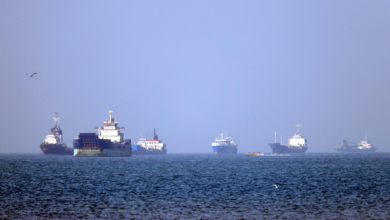
On the international level, any nuclear incident at Bushehr would lead to widespread disruptions to maritime traffic and global energy supplies passing through the Strait of Hormuz. Furthermore, such an escalation would further complicate the already tense geopolitical landscape in the Middle East and undermine diplomatic efforts to ensure the peaceful nature of Iran’s nuclear program. Therefore, the International Atomic Energy Agency (IAEA) emphasizes that the protection of nuclear facilities during armed conflicts is a fundamental principle of international humanitarian law that must be upheld to prevent transboundary disasters.