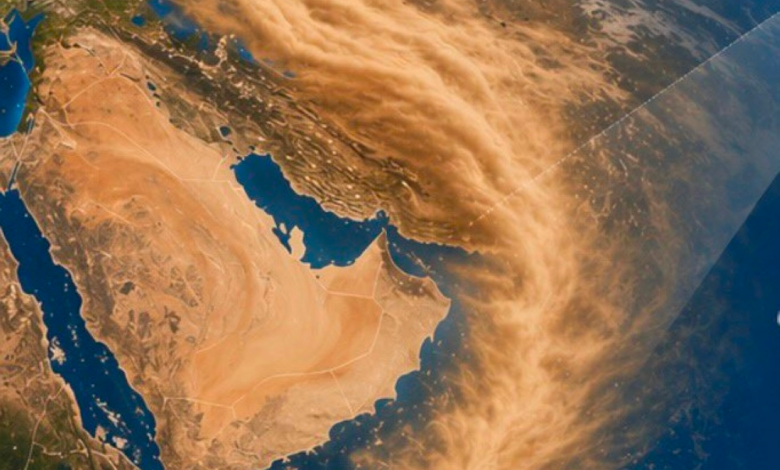

The Regional Dust Storm Center announced the detection of 54 dust storms across the Middle East and Central Asia in the past 24 hours, according to its daily report based on Meteorological Atmospheric Monitoring Data (METAR). This figure highlights the increasing frequency of extreme weather events affecting large geographical areas, raising concerns about their environmental, health, and economic consequences.
Details of the geographical distribution of dust activity
The report indicated that Uzbekistan recorded the highest number of cases with 20, making it the most affected country during the monitoring period. Saudi Arabia and Jordan followed with nine cases each, reflecting the widespread impact of the storms across various parts of the Arab world. Iran recorded seven cases, Kazakhstan four, Turkmenistan three, and the UAE two. The report noted that no dust activity was recorded in the rest of the region during the same period.
General context: A worsening natural phenomenon
Sand and dust storms are a common natural phenomenon in the arid and semi-arid regions that comprise much of the Middle East and Central Asia. These storms occur when strong, gusty winds blow across dry, loose soil, carrying enormous quantities of sand and dust into the atmosphere. Historically, this phenomenon has been part of the desert ecosystem, but climate change, drought, desertification, and human activities such as overgrazing and the draining of water bodies have led to an increase in their frequency and intensity in recent decades.
The importance and expected effects of dust storms
Dust storms not only reduce visibility, but also affect multiple vital sectors, posing significant challenges at the local, regional, and international levels.
- On a local level: Fine airborne particles pose a direct threat to public health, causing respiratory problems and increasing cases of asthma and allergies. They also disrupt air and land transportation, hinder daily economic activities, and damage infrastructure and agricultural crops.
- At the regional level, dust storms travel across national borders, affecting air quality in neighboring countries and requiring regional coordination to establish early warning systems and data exchange. The efforts of a center like the Regional Dust Storm Center are vital in this context, contributing to enhanced preparedness and the development of joint mitigation strategies.
- Internationally, dust can travel thousands of kilometers, affecting air quality on other continents and contributing to changes in global weather and climate patterns. It also impacts marine ecosystems when deposited in the oceans, where it can provide nutrients for microorganisms but can also harm coral reefs.
This intensive monitoring comes as part of the center’s ongoing efforts to track weather phenomena, raise awareness of their risks, and support relevant authorities in taking the necessary preventive measures to protect lives and property.