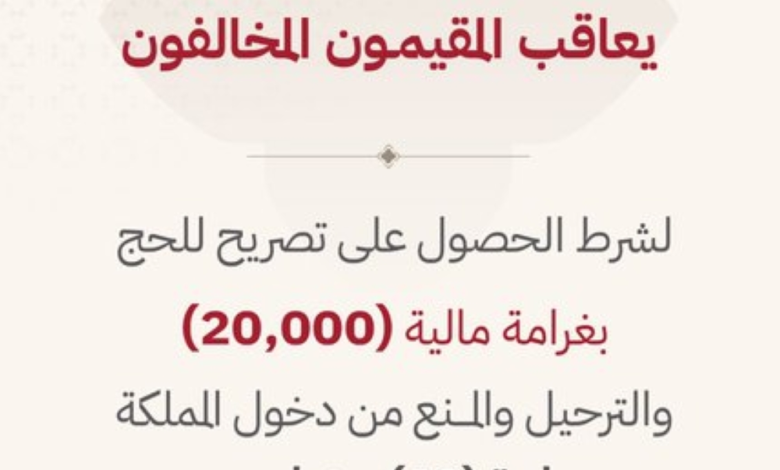
Penalties for performing Hajj without a permit: a fine of 20,000 riyals, deportation, and a 10-year ban

Tightening procedures to ensure the safety of pilgrims
The Saudi Ministry of Interior announced strict penalties for residents who violate Hajj regulations and instructions, emphasizing that obtaining a Hajj permit is a prerequisite for performing the pilgrimage. These measures are part of the Kingdom's ongoing efforts to ensure the safety, security, and comfort of pilgrims, and to organize and manage the millions of people who flock to the holy sites each year.
According to the official statement, any resident caught performing Hajj without a valid permit will face severe penalties, including a fine of 20,000 Saudi Riyals, deportation from the Kingdom, and a 10-year ban from re-entering. These deterrent penalties aim to curb the phenomenon of unauthorized Hajj, which poses a significant challenge to operational and security plans.
Historical context and importance of organizing the Hajj
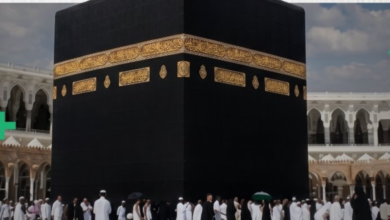
Every year, Saudi Arabia welcomes millions of Muslims from around the world to perform Hajj, the fifth pillar of Islam. Over the decades, organizing the Hajj has faced enormous logistical and security challenges due to the ever-increasing number of pilgrims. The Saudi government has invested vast resources in developing the infrastructure of the holy sites, including expanding the Two Holy Mosques, building modern road, bridge, and rail networks, and providing comprehensive health and accommodation services.
The Hajj permit system is considered one of the most important organizational tools developed for effective crowd management. It not only ensures that the number of pilgrims remains within the capacity of the holy sites, but also contributes to providing accurate data to relevant authorities to deliver necessary services and ensure everyone's safety. Performing Hajj without a permit leads to dangerous overcrowding and increases pressure on public services such as water, electricity, transportation, and healthcare, potentially jeopardizing the safety of authorized pilgrims.
The local and international impact of the new measures
Domestically, these measures contribute to strengthening the rule of law and ensuring everyone's compliance with regulations. They also protect the rights of registered pilgrims who adhered to the procedures and paid for services, guaranteeing them a safe and comfortable spiritual experience. The Ministry also called on citizens and residents to cooperate and report any fraudulent Hajj campaigns or violators via the designated numbers (911) in the Makkah, Riyadh, and Eastern regions, and (999) in the rest of the Kingdom.
On the international level, these decisions reflect the Kingdom's commitment to its responsibility as the leader of the Islamic world in organizing this great pillar of Islam. They send a clear message to all countries and those wishing to perform Hajj that they must adhere to official channels, thus contributing to preserving the civilized and positive image of the Hajj pilgrimage and ensuring the safety of pilgrims from all nationalities.