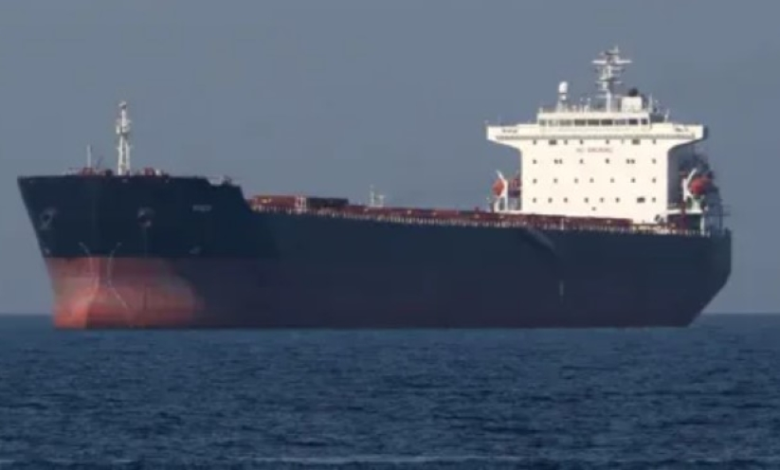
The US military imposes a blockade and prevents six ships from leaving Iran

The US military announces it has prevented six ships from leaving Iranian ports amid escalating tensions
In a significant military development reflecting the escalating tensions in the Middle East, the US military announced that its forces successfully prevented six commercial vessels from leaving Iranian ports within the first 24 hours of imposing a comprehensive naval blockade on Iran. This move comes amidst a complex political and military landscape, foreshadowing far-reaching consequences for maritime navigation and the global economy.
Details of the US naval blockade on Iran
U.S. Central Command (CENTCOM), the command responsible for managing U.S. operations and forces in the Middle East, confirmed that this massive military operation involves more than 10,000 U.S. troops, supported by more than ten warships and dozens of fighter and reconnaissance aircraft. In an official statement published on the X platform, CENTCOM explained that on the first day of the blockade, no vessel was able to breach the imposed security cordon. Six commercial vessels complied with the directives and warnings of U.S. forces, forcing them to return to Iranian ports on the Gulf of Oman.
The Central Command stressed that this blockade is being applied strictly and non-discriminatoryly to all ships, regardless of the countries whose flags they fly, whether they are attempting to enter or leave Iranian ports and coastal areas, including all Iranian maritime outlets located on the Persian Gulf and the Gulf of Oman.
Strait of Hormuz: Conflicting data and escalating tensions on the ground
Despite strong assurances from U.S. Central Command that the blockade was in place and that no ships had been able to breach it, independent shipping data from commodity data firm Kpler paints a somewhat different picture. The data shows that at least two ships managed to leave Iranian ports and transit the strategic Strait of Hormuz on Monday.
This development on the ground comes after Iranian forces effectively closed the Strait of Hormuz following the outbreak of US-Israeli military confrontations with Iran on February 28. The official US announcement of the naval blockade on Sunday was a direct result of the collapse and failure of peace talks with Tehran, prompting Washington to take these drastic measures.
The historical context of tensions in the Arabian Gulf
Historically, the waters of the Arabian Gulf and the Gulf of Oman have never been immune to geopolitical conflicts. Maritime tensions between the United States and Iran have roots stretching back decades, most notably the Tanker War during the Iran-Iraq War in the 1980s, when US forces intervened to protect international shipping. Since then, Washington has considered securing freedom of navigation in this vital region an integral part of its national security and that of its allies, while Tehran uses the threat of closing the Strait of Hormuz as a strategic bargaining chip in the face of Western sanctions and pressure.
Expected impact and strategic importance
This event is of paramount importance and has anticipated repercussions on several levels. Regionally, this blockade increases the likelihood of direct military confrontation, placing countries in the region on high alert in anticipation of any security ramifications. Internationally, the Strait of Hormuz is one of the world's most vital waterways, through which approximately 20% of global oil consumption passes, in addition to vast quantities of liquefied natural gas.
Any disruption or threat to shipping in the Strait of Hormuz, whether through a US blockade or an Iranian closure, would inevitably shock global energy markets, potentially causing a sharp and rapid rise in oil prices, shipping costs, and marine insurance premiums. This surge would, in turn, fuel global inflation, threatening the economic stability of energy-importing nations and transforming the crisis into a global concern extending far beyond the Middle East.