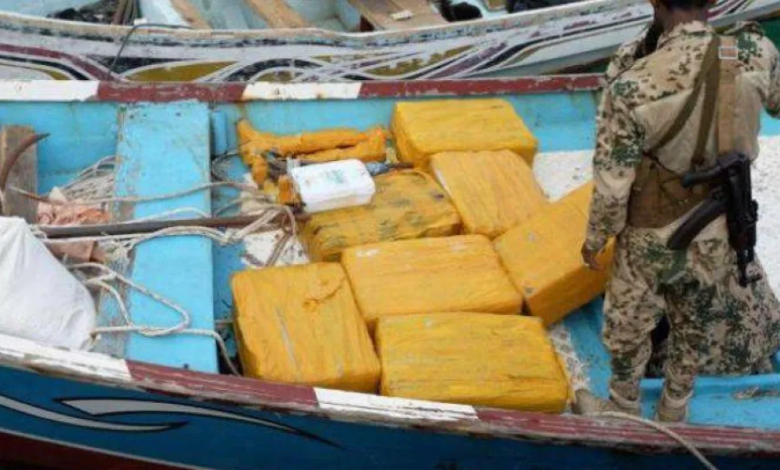

Drug trafficking: The hidden financial lifeline for funding Houthi operations
Amid the ongoing conflict in Yemen since 2014, the drug trade has emerged as one of the most important illicit tools used by the Houthi group to finance its military and maintain its control. With the economic squeeze and the decline of traditional financial resources, the group has resorted to the shadow economy, where smuggling networks, primarily of narcotics, have become a major financial lifeline fueling its various operations.
General context and historical background of the event
Historically, the drug trade in Yemen was not this systematic and extensive before the outbreak of war. With the Houthis' control of the capital, Sana'a, and large swathes of the country, the group exploited the security vacuum and the weakness of state institutions to build complex smuggling networks. Numerous international and local reports indicate that these networks do not operate independently of the group's regional allies. The Houthi militia has benefited from the expertise of smuggling networks affiliated with the Iranian Revolutionary Guard, which has a long history in the drug trade, particularly of Captagon pills and hashish, to secure supply routes through land and sea ports.
Local impact: Destruction of Yemeni society
Domestically, the Houthi drug trade has had far-reaching consequences, extending into a social and health catastrophe that strikes at the very heart of Yemeni society. The group has deliberately flooded the areas under its control with narcotics to facilitate the manipulation and recruitment of young people into its ranks. The spread of drugs among teenagers and young adults has led to soaring crime rates and the disintegration of the social fabric. Furthermore, the enormous profits are being used to buy loyalties and finance the war effort, thus prolonging the conflict and exacerbating the already dire humanitarian crisis, the worst in the world.
Regional repercussions: Targeting the security of neighboring countries
Regionally, the Houthi drug trade poses a direct threat to the national security of neighboring countries, particularly Saudi Arabia and the Gulf states. The group uses Yemeni territory as a transit point to smuggle enormous quantities of drugs across land borders and along the coastline. These operations aim to achieve two objectives simultaneously: first, to generate substantial hard currency profits to finance the purchase of weapons and drones; and second, to attempt to destabilize Gulf societies and target their youth. This has led border guards in neighboring countries to thwart hundreds of attempts to smuggle tons of hashish and Captagon.
International influence and the position of the international community
At the international level, these practices have raised serious concerns among UN organizations and those involved in combating terrorism and organized crime. Reports by the UN Group of Eminent Experts on Yemen have documented the involvement of prominent Houthi leaders in managing smuggling networks. Yemen’s transformation into a regional hub for drug trafficking threatens maritime security in the Red Sea and the Arabian Sea, where drug smuggling routes intersect with those smuggling Iranian weapons. This escalating threat necessitates concerted international efforts to strengthen maritime surveillance, cut off Houthi funding sources, and impose stringent sanctions on leaders involved in these transnational crimes.