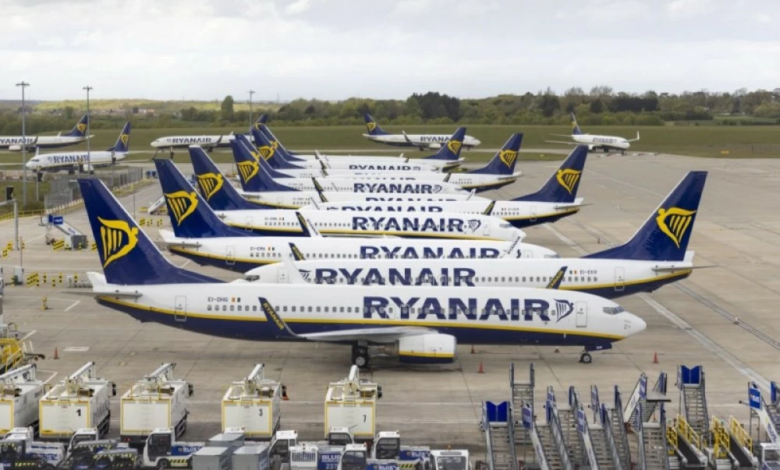

In a move that has shaken the European aviation sector, the Italian Competition and Markets Authority (AGCM) announced on Tuesday a massive fine of €255,761,000 against Irish airline Ryanair, Europe's largest low-cost carrier. The decision came after the company was accused of abusing its dominant position in the Italian air transport market, harming competition and the rights of both consumers and travel agencies.
Details of the investigation and monopolistic practices
This fine is one of the harshest penalties ever imposed by the Italian travel agency on an airline. The decision was based on the findings of a lengthy and complex investigation covering the period from April 2023 to at least April 2025. According to the agency's statement, Ryanair, which holds a dominant market share of between 38% and 40% of domestic and European flights departing from Italy, engaged in a series of systematic actions to obstruct the operations of traditional and online travel agencies (OTAs).
These practices included imposing technical and logistical restrictions, such as forcing customers who book through agencies to undergo complex "facial recognition" procedures, banning agencies' payment methods, as well as deleting group accounts and intermittently and unjustifiably blocking bookings, creating a hostile environment for intermediaries.
The "walled garden" strategy and its impact on the market
Not content with that, the company forced agencies to sign restrictive partnership agreements prohibiting them from combining Ryanair flights with those of other airlines or offering additional services such as hotel bookings and insurance, in an attempt to monopolize the entire tourism value chain. These measures were accompanied by fierce media campaigns in which the company labeled agencies that did not comply with its terms as "pirate agencies.".
Although the company presented technical solutions for integration in April 2025, the Italian authority considered that the damage had already been done, as these policies led to a reduction in consumer choices and a limitation in the diversity of tourist offerings, which negatively affected price competitiveness and the quality of services provided to travelers.
Historical context: A long-standing conflict
This isn't the first clash between Ryanair and European regulators. For years, the airline has relied on a direct-selling business model to maximize ancillary revenue and avoid paying commissions to intermediaries. Italy is a vital market for the company, with key hubs at airports like Milan and Bergamo. In 2019, Ryanair faced a €3 million fine in Italy over its hand baggage fee policies, though the fine was later overturned by a court, highlighting a history of legal wrangling.
Ryanair's reaction and legal future
Ryanair swiftly rejected the decision outright, announcing its intention to immediately appeal to the appropriate courts. The company's CEO, Michael O'Leary, described the fine as "bizarre and legally unsound," asserting that it contradicts consumer protection principles because the direct selling model offers lower prices.
The company bases its defense on a previous ruling by a Milan court in January 2024, which upheld the legality of certain aspects of its direct selling model. This decision comes at a time when Europe is witnessing unprecedented regulatory scrutiny of dominant players in digital markets, making the Ryanair case a precedent that could shape the future relationship between airlines and digital travel agencies in Europe.