Launch of the electronic Islamic library system to serve pilgrims in 1445 AH

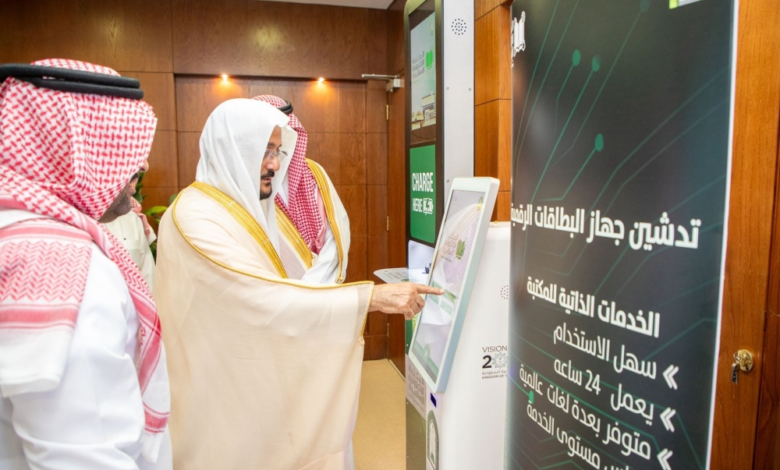
In a move reflecting the Kingdom of Saudi Arabia's commitment to utilizing the latest technologies to serve pilgrims, His Excellency the Minister of Islamic Affairs, Dawah and Guidance, Sheikh Dr. Abdul Latif bin Abdulaziz Al-Sheikh, inaugurated the electronic Islamic library card system. This inauguration comes as part of the comprehensive preparations for the 1445 AH Hajj season, and aims to enrich the religious and cultural experience of pilgrims arriving from all corners of the earth.
Context of development and digital transformation in Hajj services
The launch of this innovative device is a continuation of the Kingdom's decades-long efforts to develop its Hajj and Umrah services system. Since its founding, the Kingdom has prioritized serving the Two Holy Mosques and their visitors. With the launch of Vision 2030, the pace of digital transformation has accelerated across all sectors, including Hajj and Umrah. This vision aims to improve the quality of services provided, facilitate the pilgrims' journey, and make their experience smoother and more convenient, from obtaining visas through electronic platforms like "Nusk" to digital awareness and guidance services.
The importance of the initiative and its expected impact
The significance of the electronic library lies in its qualitative leap from traditional outreach methods reliant on distributing printed books and pamphlets to a modern and sustainable digital approach. Locally, the system enhances the operational efficiency of the Ministry of Islamic Affairs and reduces the logistical challenges associated with printing and distribution. Internationally, providing scholarly and outreach content in multiple languages breaks down the language barrier for millions of non-Arabic-speaking pilgrims, ensuring that the tolerant message of Islam reaches them directly and clearly. This project also reinforces the Kingdom's position as a leader in utilizing technology to serve Islam and Muslims.
Advanced technical specifications for comprehensive service
The new device boasts a range of technical features that make it an effective and innovative solution. In its initial phase, it supports four international languages, with a distribution capacity exceeding 2,000 digital cards daily and ample content storage. Pilgrims can obtain a card containing a QR code that directs them to the Islamic e-Library platform, which houses thousands of reliable books and audio-visual materials. The device also allows for measuring user satisfaction and generating periodic statistics, facilitating continuous service improvement. Thanks to its compact size, it can be easily deployed at airports, pilgrim stations, camps, and other locations frequented by pilgrims, operating around the clock and providing uninterrupted service.