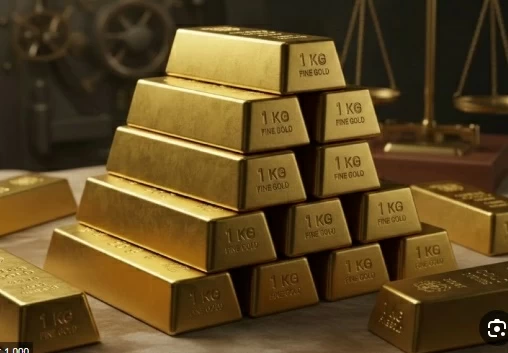

Details of the rise in gold and silver prices
Gold and silver prices saw a notable rise at the close of trading today, with the yellow metal resuming its strong upward trend, directly supported by the decline of the US dollar index against a basket of major currencies. Markets received a significant signal from US President Donald Trump regarding the possibility of resuming negotiations to end the war with Iran in Pakistan within the next two days. This geopolitical development was immediately reflected on trading screens, with June gold futures contracts rising by 1.73%, equivalent to an increase of $82.70, to close at $4,850.10 per ounce.
In the same positive context for precious metals, silver futures for April delivery rose significantly by 5.12%, or $3.868, to settle at $79.391 per ounce, reflecting a state of cautious optimism among investors.
The historical context of gold as a safe haven
Historically, gold has been considered the primary safe haven for investors during times of crisis, war, and geopolitical turmoil. When tensions escalate in vital regions, capital rushes to escape high-risk assets like stocks and seeks refuge in safe havens to protect its value. The inverse relationship between the dollar and gold plays a pivotal role here; the weaker the dollar, the more attractive commodities priced in it, especially gold, become to investors holding other currencies. Statements about resuming negotiations have added a layer of anticipation to global markets, further boosting investment demand for gold bullion as a hedge against any potential escalation.
The impact of inflation and the cost of services on markets
On the economic front, these increases coincided with the release of important official data showing that producer prices in the United States rose less than expected in March. This was accompanied by a noticeable stability in the cost of services. However, the economic landscape is not without challenges, as the continued rise in energy prices, largely attributed to the repercussions of the war with Iran, has been and continues to fuel inflationary pressures in the global economy. Higher energy costs inevitably translate into increased production and transportation costs, creating an inflationary wave that gradually passes to the end consumer.
Interest rates and investor expectations
Despite gold's traditional and well-known role as an effective hedge against inflation, it faces structural challenges in a high-interest-rate environment. The precious metal does not offer a fixed return like bonds or bank deposits, making it less attractive when central banks raise interest rates. Currently, traders are closely monitoring Federal Reserve policy, with current forecasts indicating only a 33% probability of a US interest rate cut this year. This downward revision is compared to earlier estimates that anticipated two rate cuts before the recent military tensions.
Expected regional and international impacts
Regionally and internationally, this volatility in gold and energy prices has far-reaching effects. In the Middle East, local jewelry markets are directly impacted by these price spikes, potentially leading to a slowdown in retail sales. Meanwhile, oil-exporting countries are benefiting from higher energy prices. As the outcome of the anticipated negotiations in Pakistan remains uncertain, global financial markets will likely remain volatile, with investors carefully balancing their portfolios.