
Introduction: A qualitative leap in the production of Taif roses
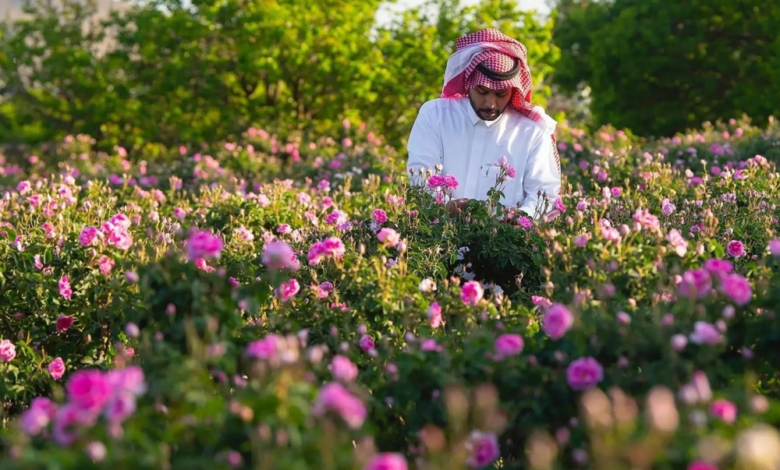
The Sustainable Rural Agricultural Development Program, "Reef Saudi Arabia," announced that the Taif rose in Saudi Arabia has achieved unprecedented leaps in production volumes. The sector recorded remarkable growth in annual production exceeding 15%, directly contributing to the revitalization of the rose trade and meeting increasing global demand. This has generated substantial economic returns for small farmers and producers in the Taif region, contributing to improving their standard of living.
Historical context: Taif, the capital of fragrant roses
Historically, the name of Taif Governorate has been associated with roses for hundreds of years, earning it the nickname "City of Roses." The cultivation of roses in this mountainous region dates back centuries, as the fragrant seedlings found an ideal climatic environment for growth on the peaks of the Sarawat Mountains. Successive generations of Saudi farmers have inherited the secrets of rose cultivation and distillation, making it today an authentic cultural and heritage symbol reflecting the richness of nature in the Kingdom, and an integral part of the cultural and touristic identity of the Makkah region.
Economic importance and its local and international impact
Domestically, this growth directly supports the goals of Saudi Vision 2030, which aims to diversify national income sources and promote sustainable rural development. The sector contributes to creating new job opportunities and revitalizing ecotourism and agritourism through annual festivals that attract hundreds of thousands of visitors. Regionally and internationally, Taif rose oil is considered one of the rarest and most expensive essential oils in the world, with leading international perfume houses vying to acquire it, thus reinforcing the Kingdom's position as a major exporter of luxury perfume products.
Production geography and environmental factors
Majed Al-Buraikan, the official spokesperson for the "Saudi Countryside" program, explained that Taif is the main center for rose production in the Kingdom. Rose farms are strategically located in areas such as Al-Hada, Al-Shafa, Al-Hasna, Al-Qadirin, Wadi Mahram, south of Taif, Al-Hawiyah, and Al-Sail. The total cultivated area is approximately 700 hectares, encompassing nearly 1,300 farms, and producing approximately 500 million roses annually. The sector also includes 36 specialized factories for the production and manufacturing of perfumes, with an investment value and returns reaching 52 million riyals. These plants are characterized by their low water requirements, high productivity, and low cultivation costs thanks to the temperate climate.
High global demand and versatility
The market is witnessing the spread of more than 20 types of aromatic plants, leading to an increase in domestic and global demand ranging between 10% and 15% annually. Taif roses have diverse uses, including in the manufacture of luxury perfumes, medicinal and therapeutic preparations, as well as in the food industry, such as when added to water, tea, and various beverages.
International cooperation and future challenges
To ensure the sustainability of this growth, Al-Buraikan noted the close cooperation with the Food and Agriculture Organization of the United Nations (FAO) to implement initiatives supporting the sector. Despite these successes, the sector faces challenges that the program seeks to overcome, most notably the urgent need to increase scientific studies and research to develop plant varieties, and to strengthen the role of agricultural cooperatives to facilitate financing and improve production efficiency for small farmers.