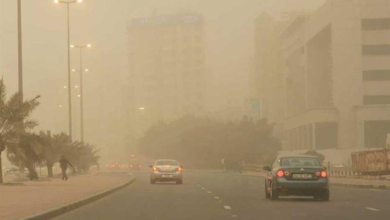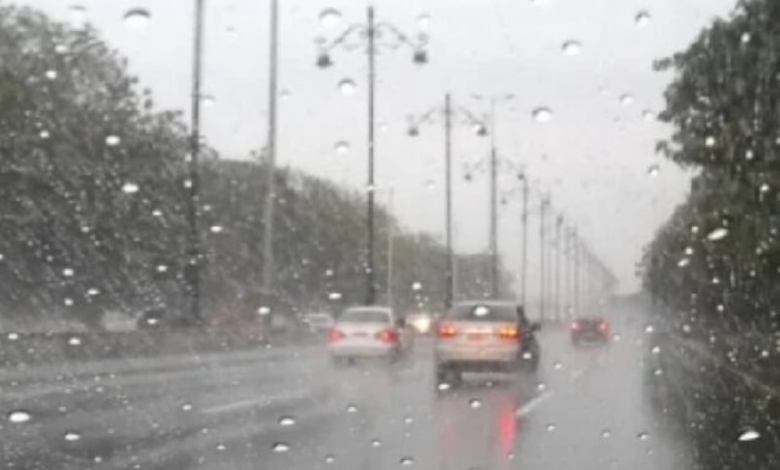

The National Center for Meteorology in Saudi Arabia issued its daily weather report, forecasting continued moderate to heavy thunderstorms across large parts of the country. The center warned that these storms could lead to flash floods and will be accompanied by hail and strong winds that will stir up dust and reduce horizontal visibility.
Areas affected by the rainy weather
According to the report, the areas affected by the weather conditions include:
- Northern and Central Regions: Al-Jawf, Northern Borders, Eastern Province, Riyadh, and Al-Qassim.
- Western and southern regions: Mecca, Al-Baha, Asir, Jazan, and Najran.
The report also indicated that active winds stirring up dust and sand will also affect parts of the Tabuk, Hail and Madinah regions, which may cause reduced visibility.
Climate context and the importance of early warning
Most regions of Saudi Arabia have an arid desert climate, with rainfall being rare and irregular. However, during certain times of the year, particularly in spring and autumn, the Kingdom is affected by low-pressure systems that cause atmospheric instability, leading to heavy rainfall over short periods. Due to the dry and hardened soil in many areas, it cannot absorb large quantities of water quickly, making it prone to flash floods in valleys and ravines. This underscores the critical importance of the warnings issued by the National Center of Meteorology and Environmental Protection. Early warning systems enable relevant authorities, such as the Civil Defense, to take the necessary precautions to protect lives and property and to alert citizens and residents to the need to stay away from floodplains and valleys.
Expected effects and precautionary measures
Such weather events have widespread local impacts. In terms of public safety, flash floods pose a direct threat to lives and vehicles, and can cause road closures and traffic disruptions. Economically, they can damage infrastructure, private property, and farms. However, these rains also have a positive side, contributing to the replenishment of groundwater reservoirs and providing water for agriculture and grazing, which has a positive impact on vegetation and the environment in general. Authorities consistently urge citizens and residents to follow official warnings, exercise extreme caution, and avoid crossing valleys during rainfall and flash floods.
State of the Red Sea and the Arabian Gulf
Red Sea: Surface winds are expected to be northwesterly to northerly at speeds of 25-45 km/h in the northern and central parts, and southeasterly to southerly at speeds of 15-35 km/h in the southern part, potentially reaching 45 km/h towards the Bab el-Mandeb Strait. Wave height will be 1-2 meters, possibly reaching 2.5 meters towards the strait, with sea conditions ranging from moderate to rough.
Arabian Gulf: Surface winds will be northeasterly to southeasterly, shifting to southeasterly to southerly in the evening at speeds of 12-36 km/h in the northern part, and northwesterly to westerly at speeds of 16-36 km/h in the central and southern parts, potentially exceeding 50 km/h with the formation of thunderstorms. Wave height will be between half a meter and one and a half meters, potentially exceeding two meters with thunderstorms, with sea conditions ranging from slight to moderate, becoming rough with thunderstorms.