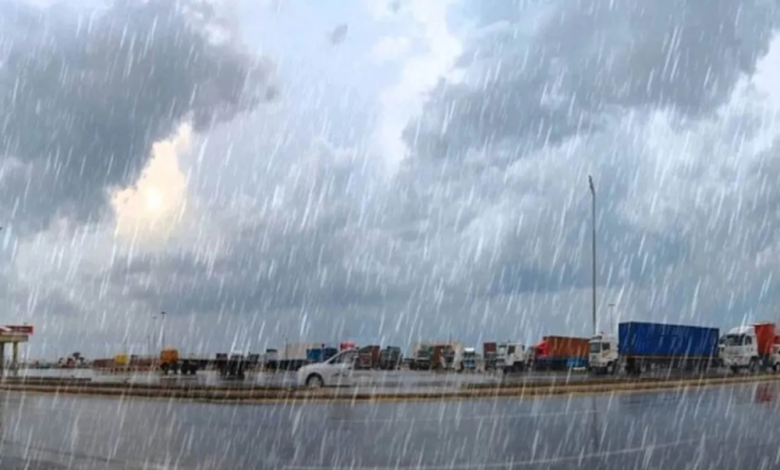

The National Center for Meteorology in Saudi Arabia issued its highest level of warning on Wednesday, raising the alert to "red" across large parts of four major regions: Riyadh, Mecca, Asir, and Najran. This advanced warning comes amid forecasts of heavy rainfall that could lead to flash floods and overflowing wadis, accompanied by other severe weather phenomena.
Alert details and affected areas
According to the center's report, the effects of the rainy weather include high-speed winds that could cause near-zero horizontal visibility, as well as heavy hail and thunderstorms. The affected governorates and districts have been precisely identified to enable residents to take maximum precautions. The list of areas under red alert includes the following:
- Riyadh region: Thadiq, Huraymila, Shaqra, Dhurma, Marat, Al-Rayn, Al-Quway'iyah, As-Sulayyil, and Wadi Ad-Dawasir.
- Makkah Region: Al-Khurmah, Turbah, and Ranyah.
- Asir region: Al-Amwah, Al-Arin, Bisha, Tathlith, Tarib, Al-Namas, Balqarn, Tanomah, Al-Harjah, Al-Rabou’ah, Al-Farsha, Sarat Abidah, and Dhahran Al-Janoub.
- Najran region: Badr Al Janoub, Thar, Habuna, Khubash, Najran, and Yadma.
The center also issued another alert for the Eastern Province, warning of surface wind activity and dust storms that would reduce visibility, with the possibility of light rain in the governorates of Jubail, Khobar, Dammam, Qatif, Ras Tanura, Al-Ahsa, Al-Udayd, Buqayq, Hafr Al-Batin, Khafji, Al-Nairiyah, and Qaryat Al-Ulya.
Climate context and the importance of warnings
This heavy rainfall is part of a season characterized by frequent weather fluctuations in the Arabian Peninsula. The Kingdom is often affected by low-pressure systems originating from the Red Sea or the Arabian Sea, which, when they meet moist air masses, create ideal conditions for the formation of cumulonimbus clouds and heavy rainfall. Although the Kingdom is mostly desert, these seasonal rains play a vital role in replenishing groundwater reserves and supporting agriculture, but they also pose a significant risk if they are heavy and occur over a short period.
Expected impacts on infrastructure and public safety
The red alert is of utmost importance, indicating the need for immediate action to protect lives and property. This weather system is expected to have a direct impact on daily life, as flash floods may cut off main roads, isolate villages and towns, and disrupt traffic in major cities. The risks associated with thunderstorms and strong winds, which could affect electricity and communication networks, are also increasing. In this context, relevant authorities, such as the General Directorate of Civil Defense, are raising their level of preparedness and continuously urging citizens and residents to stay away from valleys and floodplains, avoid crossing them, and follow updates issued by the National Center of Meteorology to ensure their safety.