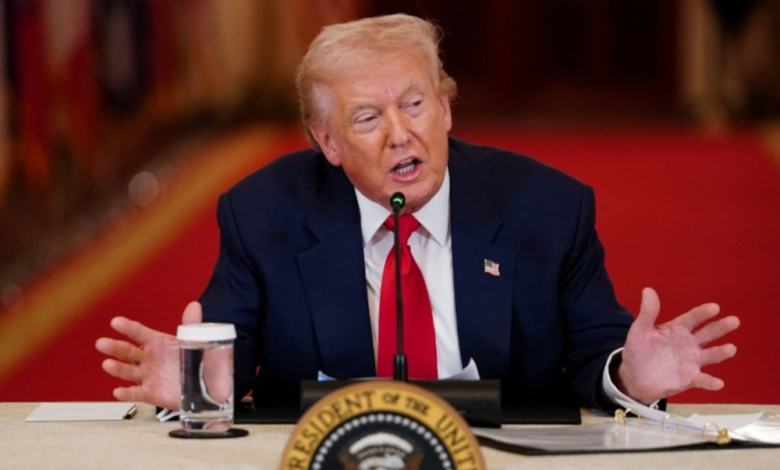
Trump intervenes to end the Strait of Hormuz crisis after an agreement with Iran

Introduction: A sudden shift in the course of the crisis
US President Donald Trump announced that the United States would play a pivotal role in ending the disruptions to maritime traffic in the strategic Strait of Hormuz. This surprise announcement came just hours after Washington and Tehran reached a crucial agreement for a two-week ceasefire, marking a significant shift in the strained relations between the two countries and a step back from the brink of all-out military escalation.
Details of the agreement and ceasefire
According to reports, the United States and Iran agreed to a two-week ceasefire just one hour before the expiration of the strict deadline set by Trump. The US president had threatened large-scale military strikes, which he described as capable of wiping out an entire civilization and returning Iran to the Stone Age. In a subsequent development, Tehran announced its commitment to ensuring the safe passage of commercial vessels and oil tankers through the Strait of Hormuz. Iranian Foreign Minister Abbas Araqchi confirmed that safe passage through the strait would be possible through direct coordination with the Iranian armed forces, taking into account the necessary technical constraints to guarantee the safety of international navigation.
General context and historical background of the Strait of Hormuz
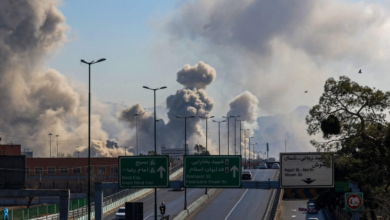
The Strait of Hormuz is one of the world's most important and sensitive waterways, connecting the Persian Gulf, the Gulf of Oman, and the Arabian Sea. Historically, this strait has been the scene of numerous geopolitical tensions, most notably the Tanker War of the 1980s. Its strategic importance lies in its role as a major artery for global energy flows, with approximately one-fifth of the world's daily crude oil consumption passing through it, in addition to enormous quantities of liquefied natural gas. Recent tensions and conflicts in the Middle East have brought maritime traffic to a virtual standstill for weeks, resulting in sharp fluctuations and a significant rise in the prices of crude oil and its derivatives in global markets.
Expected impact of the agreement (locally, regionally and internationally)
This agreement is of paramount importance on multiple levels. Internationally, the stability of navigation in the Strait of Hormuz will reassure global markets, positively impacting energy price stability and easing the economic burden on oil-importing countries. Regionally, this agreement reduces the likelihood of a full-scale military conflict in the Middle East, giving countries in the region an opportunity to strengthen their security and economic stability. Domestically, for Iran, Trump indicated that this agreement could pave the way for reconstruction and substantial revenue generation, potentially alleviating the country's crippling domestic economic crisis.
Trump's statements and his vision for the future of the Middle East
In a post on his social media platform Truth Social, Trump asserted that the United States would help resolve the maritime disruptions, promising numerous positive measures. He added that Washington would stockpile large quantities of supplies and remain prepared to ensure the situation proceeds smoothly. In stark contrast to his previous threats, Trump concluded his remarks on an optimistic note, stating: "Just as we are witnessing in the United States, this could be the golden age of the Middle East!" This reflects a radical shift in the US administration's strategy for dealing with crises in the region.