The Pentagon is studying plans for ground operations in Iran and their implications

Prominent American media outlets, most notably The Washington Post, have revealed sensitive military developments concerning the Pentagon's preparations for ground operations in Iran. These plans come amid escalating tensions as Washington seeks to bolster its strategic military presence in the Middle East to protect its interests and allies.
Nature of potential military operations
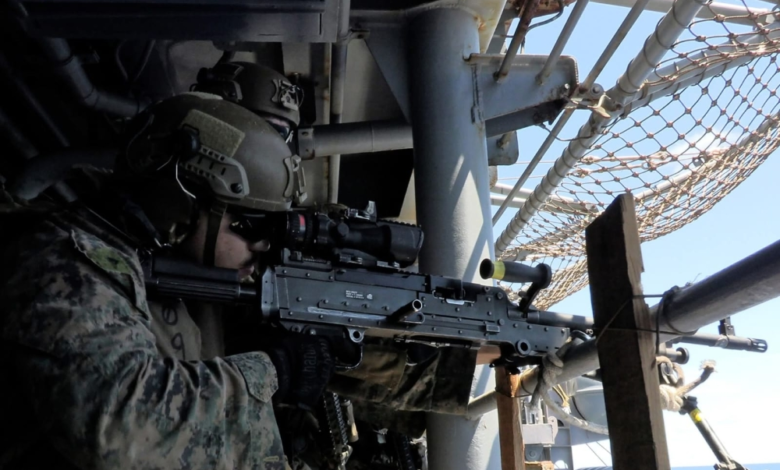
The newspaper quoted unnamed US officials as saying that the military plans under consideration do not amount to a full-scale ground invasion of Iranian territory. Rather, the current strategy focuses on conducting precise and targeted raids led by special operations forces and infantry units. These operations are expected to continue for several weeks with the aim of neutralizing specific threats and striking strategic targets without becoming embroiled in a large-scale, open war.
US military reinforcements in the Middle East
These leaks coincide with official announcements from the US Central Command regarding the bolstering of military capabilities in the region. The amphibious assault ship USS Tripoli has arrived in Middle Eastern waters, carrying a strike force of approximately 3,500 sailors and Marines. This ship serves as a floating base capable of supporting complex land and air operations. Furthermore, US media outlets have reported that the US administration is considering sending at least 10,000 additional troops to the region soon.
The political situation and uncertainty in Washington
On the political front, the final position of the US administration remains unclear. It is still uncertain whether President Donald Trump will fully authorize these military plans, approve parts of them, or reject them outright. Reflecting differing views within the administration, Secretary of State Marco Rubio recently asserted that the United States is capable of achieving its strategic objectives within the next two weeks without deploying ground troops.
The historical context of US-Iranian tensions
To understand these developments, it is necessary to consider the historical context of US-Iranian relations, which have been marked by decades of hostility. Tensions have escalated significantly since Washington withdrew from the Iran nuclear deal in 2018 and implemented a policy of “maximum pressure.” The confrontations culminated in the assassination of Quds Force commander Qassem Soleimani in early 2020, followed by Iranian missile strikes on US bases in Iraq. Since then, the two countries have been engaged in a proxy war through regional actors and reciprocal cyber and maritime attacks.
Expected regional and international repercussions
These military plans, if implemented, would have enormous repercussions at both the regional and international levels. Regionally, any direct military intervention in Iran could ignite a wider conflict involving Tehran's allies in the region, threatening the security of navigation in the Strait of Hormuz, through which a large portion of the world's oil supply passes. Internationally, this escalation raises concerns among world powers about a new energy crisis and an unprecedented rise in oil prices, as well as complicating diplomatic efforts aimed at achieving stability and peace in the Middle East.