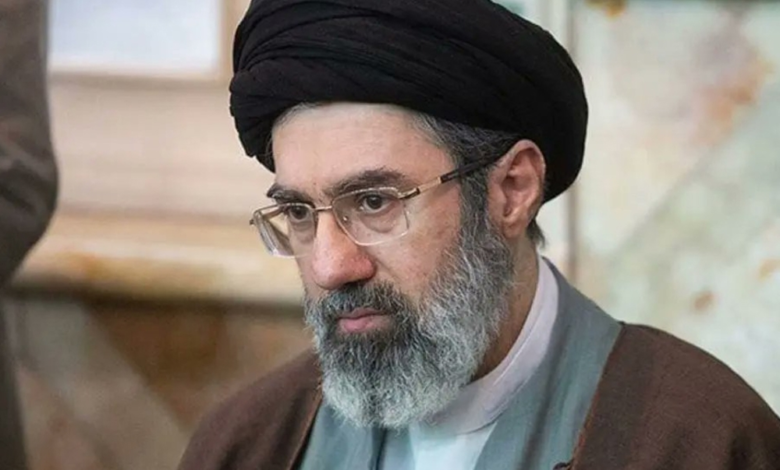
Mojtaba Khamenei seriously injured and power transferred to the Revolutionary Guard | Report

Exclusive details about the health condition of the new Iranian Supreme Leader
The New York Times, citing Iranian officials, reported that Iran's new Supreme Leader, Mojtaba Khamenei, suffered severe injuries in the airstrike that killed his father, former Supreme Leader Ali Khamenei. Although Mojtaba remains conscious, his complex medical condition has led to the temporary delegation of decision-making authority to generals in the Iranian Revolutionary Guard.
According to the report, Mojtaba Khamenei's absence from public appearances since assuming office, and his reliance solely on written statements, has sparked widespread speculation about his health and his ability to govern the country. The newspaper provides detailed information about his injuries, noting that he has undergone three surgeries on one of his legs and is expected to be fitted with a prosthetic limb. He also had surgery on one of his hands, which is gradually regaining function. The new Supreme Leader also suffers from severe burns to his face and lips, making speaking extremely difficult and potentially requiring reconstructive surgery in the future.
General context: The assassination of Ali Khamenei and the rise of his son
This development follows a seismic event in the region: the assassination of Supreme Leader Ali Khamenei, who had ruled Iran for decades since the death of Ayatollah Khomeini in 1989. The sudden power vacuum led to a swift and opaque transition, resulting in the designation of his son, Mojtaba, as his successor. Mojtaba Khamenei’s name had long been mentioned in decision-making circles as a potential successor, but the idea of “dynastic succession” was considered a political taboo in the Islamic Republic. This rapid rise, believed to have been orchestrated by the Revolutionary Guard, represents a fundamental shift in the power structure of Iran.
Significance and expected effects: Iran in the grip of the Revolutionary Guard
The critical health condition of Mojtaba Khamenei and the transfer of actual power to the Revolutionary Guard have profound implications at the local, regional and international levels.
- Domestically, this situation consolidates the military establishment's complete control over the levers of power, transforming the regime's religious and political facade into a cover for the generals' authority. This shift could lead to harsher repression of internal opposition and escalating tensions in an Iranian society already grappling with economic and social crises.
- Regionally: Iran, under the de facto leadership of the Revolutionary Guard, is expected to adopt a more assertive and aggressive foreign policy. This could lead to increased support for its allied armed groups in the region, from Lebanon and Syria to Iraq and Yemen, further destabilizing the Middle East.
- Internationally, this development puts the Iranian nuclear issue and relations with Western powers at risk. With the rise of a more hardline faction, the chances of reaching diplomatic solutions may become more difficult, increasing the likelihood of direct confrontation and exacerbating global tensions.
The report noted that direct contact with Mojtaba Khamenei is extremely limited for security reasons, as he keeps a low profile and his instructions are conveyed through handwritten messages, which reinforces the ambiguity surrounding the future of the leadership in Iran.