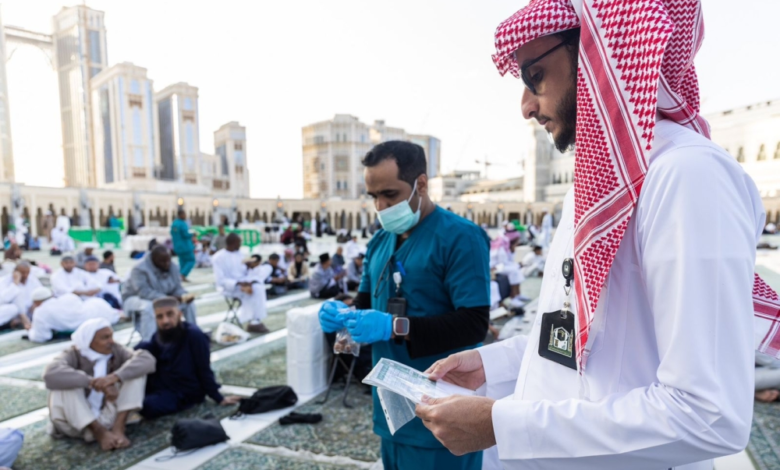
Iftar meals for fasting people at the Grand Mosque in Mecca: A quarter of a million meals daily during Ramadan

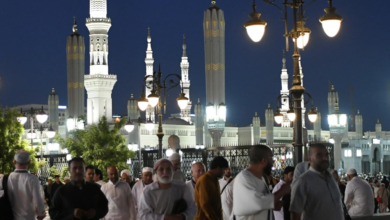
As the sun sets each day of the holy month of Ramadan, the Grand Mosque in Mecca transforms into the world's largest communal iftar table, a magnificent display of faith embodying the highest ideals of solidarity and compassion. Hundreds of thousands of worshippers and pilgrims from around the globe gather around a single table, where differences dissolve and the spirituality of the blessed month is fully manifested, all within a meticulously organized system overseen by the General Presidency for the Affairs of the Two Holy Mosques.
Record numbers reflect the magnitude of the event
Recent statistics reveal the immense efforts undertaken to serve pilgrims, with the holy month of Ramadan marking the annual peak in the number of iftar meals. Figures indicate that approximately 220,000 to a quarter of a million meals are distributed daily within the Grand Mosque and its courtyards during this blessed month. This staggering number represents a significant increase compared to the average of around 7,000 meals served on ordinary days throughout the year, or even on days of voluntary fasting (such as Mondays, Thursdays, and the three days of the full moon), when the average reaches 35,000 meals.
Historical depth and Islamic heritage
These tables are not merely for casual meals, but rather an extension of a long-standing Islamic tradition known as "Rifada and Siqaya," a service to pilgrims and Umrah performers that God has bestowed upon the people of Mecca since ancient times. This service has evolved over the ages, transitioning from traditional individual and family efforts to a structured, institutionalized operation that relies on the latest technologies and food safety and quality standards, in line with the Kingdom's Vision 2030 to provide the highest quality services to the guests of God.
Impressive social impact and logistical organization
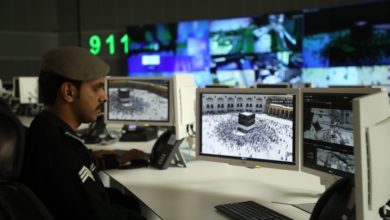
The grandeur of this event is evident in its profound social impact, strengthening the bonds of brotherhood among Muslims of diverse nationalities. Logistically, organizing these communal meals is a remarkable feat; the tables are laid, the food served, and the area cleaned within minutes of the prayer, ensuring no disruption to the circumambulation, the ritual walking between Safa and Marwa, and the prayer itself. This demonstrates exceptional efficiency in crowd management and service delivery.
Governance of charitable work and regulation of permits
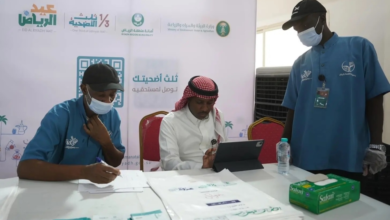
In its ongoing efforts to enhance services, the General Authority for the Care of the Two Holy Mosques announced proactive regulatory measures, including closing the application period for Ramadan 1447 AH (2026) permits for breaking the fast during Ramadan, following the conclusion of the designated application period in cooperation with the "Ihsan" and "Nusk" platforms. This step aims to ensure the highest standards of governance and transparency.
The Authority has set precise controls for contributors, whereby the organization of Iftar for individuals is limited to one meal (25 or 50 meals), while the minimum for non-profit organizations starts from 10 meals, with the requirement of electronic payment via the “Ihsan” platform, to ensure that the cost of the meal includes full implementation and service, thus providing a safe and comfortable worship environment for worshippers.