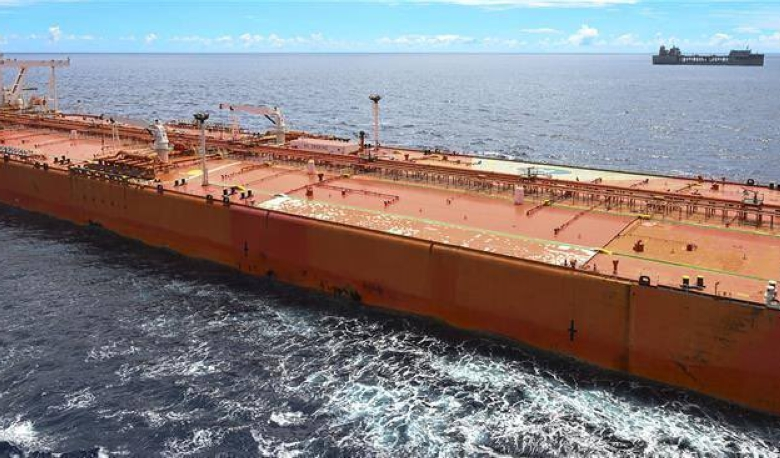

In a move reflecting increased U.S. scrutiny of Iranian oil exports, the U.S. Department of Defense (Pentagon) announced that its forces intercepted and inspected an Iranian-linked oil tanker subject to sanctions, as part of its ongoing efforts to dismantle smuggling networks supporting Tehran. The operation, conducted in the U.S. Indo-Pacific Command area of responsibility, targeted the unflagged tanker Tiffany and was carried out “without incident,” according to the official statement released by the Department.
General context: Iran’s “secret fleet” network
This incident comes amid a long-standing conflict between the United States and Iran over economic sanctions, particularly those imposed on Iran's oil sector after Washington withdrew from the nuclear agreement in 2018. To counter these sanctions, which aim to cripple its economy, Iran has resorted to forming what is known as a "secret fleet" or "shadow fleet"—a vast network of older tankers that employ sophisticated methods of concealment to illegally export crude oil. These methods include disabling transponders (AIS) to avoid tracking, frequently changing ship names and flags, and conducting ship-to-ship transfers (STS) at sea to obscure the origin and final destination of the shipments.
Details of the interception process
According to data from the intelligence firm Vanguard Tech, the tanker Tiffany, nominally flying the Botswana flag, was intercepted in the Indian Ocean. MarineTraffic tracking data showed the vessel's last known location was between Sri Lanka and the Strait of Malacca. Meanwhile, Kpler, a maritime tracking company, revealed that the tanker loaded an estimated two million barrels of crude oil from Iran's Kharg Island on April 5 and transited the strategic Strait of Hormuz on April 9, with its declared destination being Singapore. Areas off the coasts of Singapore and Malaysia are a major hub for clandestine oil shipments by the Iranian fleet, where Iranian crude is blended with other types of oil before being shipped to its final destinations, often China.
Importance and expected effects
This interception sends a clear message from the United States that it will not compromise on enforcing its sanctions and that international waters are not a “safe haven for sanctioned vessels,” as the Pentagon statement put it. Regionally, such operations heighten tensions in vital waterways for global trade, such as the Strait of Hormuz and the Arabian Sea, and raise concerns about potential Iranian retaliatory attacks targeting commercial vessels in the region. Internationally, this incident highlights the challenges facing the international community in monitoring and enforcing sanctions and puts pressure on countries believed to be the final destination for smuggled Iranian oil. The United States reaffirms its commitment to “dismantling illicit networks and intercepting sanctioned vessels that provide material support to Iran,” signaling a continuation of the cat-and-mouse game on the high seas.