
FIFA, in conjunction with the International Football Association Board (IFAB), has announced a package of significant legal amendments to be implemented before the 2026 World Cup finals, to be held in the United States, Canada, and Mexico. These decisions are a crucial step towards promoting fair play, combating the growing scourge of racism, and enforcing strict discipline on the pitch, in response to recent unfortunate incidents in stadiums worldwide.
General context: Combating racism and preserving the integrity of refereeing
These amendments were not a spur-of-the-moment decision, but rather the culmination of lengthy discussions and a direct result of mounting pressure to address behaviors that tarnish the game's reputation. Over the years, football has suffered from recurring incidents of racism, the most prominent and impactful of which recently was the abusive campaigns targeting Real Madrid star Vinicius Junior in Spanish stadiums. These incidents revealed the cunning tactics employed by some players to conceal their abuse, prompting strong legislative intervention. Simultaneously, instances of mass protests against refereeing decisions, escalating to threats of walking off the pitch, posed a significant challenge to the authority of referees and the integrity of matches.
The “Venice Law”: No tolerance for hidden abuses
The most notable of the new amendments, dubbed the “Vinicius Rule” by the media, grants referees the authority to issue a straight red card to any player who covers their mouth with their hand during a verbal altercation with an opponent, if there is suspicion of racist or insulting language. This decision directly targets the behavior seen in the incident where Gianluca Prestini was accused of racially abusing Vinicius, as it is difficult for referees and CCTV cameras to capture the actual words. FIFA President Gianni Infantino confirmed his full support for this measure, stating that “covering the mouth raises serious suspicions and necessitates deterrent measures to maintain a respectful sporting environment.”.
The “Senegal” law: Protecting the integrity of the match
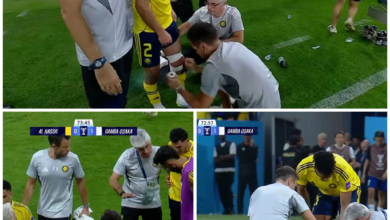
In a related development, another amendment was passed to address the phenomenon of players walking off the pitch in protest against refereeing decisions. Under the new law, any team whose players leave the field will be considered to have forfeited the match. The scope of the penalty has also been extended to include members of the technical staff who incite players to this behavior. This measure comes as a reaction to the fallout from the hypothetical 2026 Africa Cup of Nations final (mentioned in the original article), where the Senegalese national team players and staff walked off the pitch in protest against a refereeing decision, leading to widespread chaos and their subsequent disqualification from the title. This law aims to reinforce the principle of respecting refereeing decisions and ensure that matches are completed until the final whistle.
Expected impact: Towards more disciplined football
These changes are expected to have a profound impact on the behavior of players and technical staff at both the national and international levels. They not only provide referees with new tools to enforce order, but also send a clear message that FIFA will not tolerate any behavior that undermines the integrity of the game or promotes discrimination. With the 2026 World Cup approaching—the largest tournament in history with 48 participating teams—FIFA is striving to ensure that the competition is free from behavioral blemishes and that the focus remains on the technical and positive aspects of the world's most popular sport.