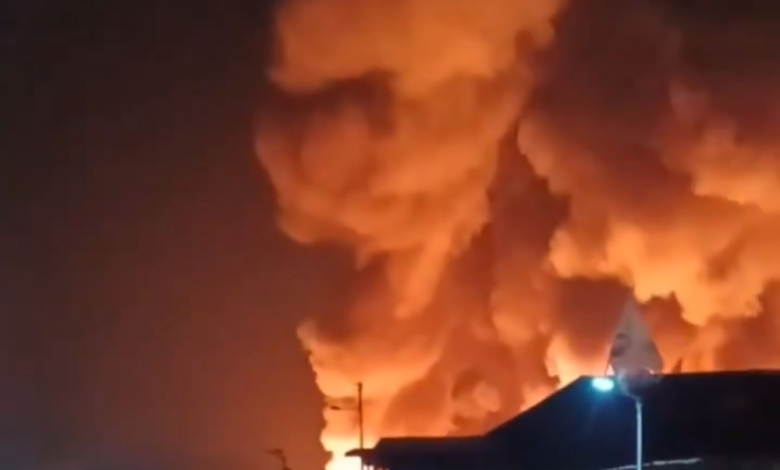

broke out Malaysian water village in Sabah, causing widespread human and material damage. The blaze completely destroyed approximately 200 homes, leaving hundreds of people homeless within hours. This incident is the latest in a series of disasters to strike traditional settlements in the region.
Details of the fire outbreak and rescue efforts
In detailing the incident, Sandakan Fire and Rescue Chief Jimmy Lajong explained that authorities received an urgent report of a fire breaking out in the area at 1:32 a.m. local time. He noted that the rapid spread of the fire was not surprising given the surrounding conditions; strong winds played a major role in fanning the flames, and the close proximity of the wooden houses characteristic of these villages made firefighting efforts a significant challenge for rescue teams.
Population displacement and Malaysian government intervention
For its part, the official Malaysian news agency Bernama confirmed that the fire was concentrated in a village built on a waterway, a common architectural feature in Sabah state. The disaster has so far displaced approximately 445 people who lost their belongings and homes. Relief teams are working to determine the final number of those affected to ensure they receive the necessary support as quickly as possible.
On the governmental level, Malaysian Prime Minister Anwar Ibrahim moved quickly to reassure citizens, emphasizing that the federal government is working in full and continuous coordination with the authorities of Sabah state. This coordination aims to provide urgent basic assistance to those affected and to establish temporary shelters and resettlement centers to ensure a dignified life for them until permanent solutions to their crisis are found.
The historical context of the water villages in Sabah
Historically, the water villages (Kampung Air) are an integral part of the cultural and architectural heritage of Sabah and Borneo in general. These villages are typically built on wooden stilts over coastal waters or rivers, relying heavily on timber and traditional building materials. Despite their tourist appeal and historical significance, they have suffered for decades from similar devastating fire incidents. The close proximity of the houses, the lack of modern fire-fighting infrastructure, and the use of highly flammable materials have all contributed to making these villages constantly vulnerable to large-scale disasters at the slightest spark.
Local and regional impact of the disaster
This event is of paramount importance and has multifaceted implications. Locally, the fire is placing immense pressure on emergency and social services in Sandakan, requiring a full mobilization of medical and food resources. Regionally and nationally, the recurrence of such incidents underscores the urgent need to review urban planning policies in East Malaysia. This disaster compels policymakers to seriously consider how to balance preserving the architectural heritage of the water villages with implementing modern safety standards that protect residents' lives and property from the threat of future fires.