Aoun defends negotiations with Israel: Our goal is to end the war, not to betray it

In a striking statement reflecting the sharp political divisions in Lebanon, former Lebanese President Michel Aoun strongly defended the decision to enter into direct negotiations with Israel to demarcate the maritime border, emphasizing that the ultimate goal is to end the decades-long state of war, not to sign a “humiliating agreement.” Aoun also leveled sharp, albeit implicit, criticism at Hezbollah, asserting that the true “treason” lies with those who drag Lebanon into wars that serve foreign interests.
A complex historical context:
These statements come amid a sensitive negotiation process between Lebanon and Israel, two countries that have been officially at war since 1948. The relationship between the two countries has been marred by numerous military conflicts, most notably the Israeli invasion of Lebanon in 1982 and the July War of 2006. Despite the signing of the 1949 Armistice Agreement, which Aoun referred to as a historical example, the borders have not been definitively demarcated, especially the maritime border, which has gained major strategic importance after the discovery of promising gas fields in the eastern Mediterranean.
The importance and impact of negotiations:
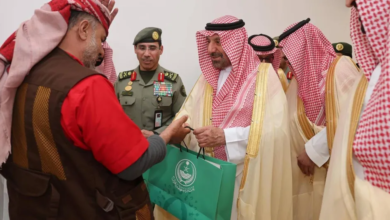
The negotiations, mediated by the United States, center on a maritime area of approximately 860 square kilometers rich in natural gas. Lebanon sees exploiting this resource as a potential lifeline for its collapsing economy, while Israel seeks to secure its fields, such as the Karish field, and begin production without security threats. During a meeting with a delegation from the southern Hasbaya region, Aoun stated, "My goal is to reach an end to the state of war with Israel, similar to the Armistice Agreement," adding, "Was the Armistice Agreement a humiliation? I assure you that I will not accept reaching a humiliating agreement.".
Internal divisions and regional repercussions:
Domestically, these negotiations have sparked deep divisions. While the presidency and other political factions support them as an economic and sovereign necessity, Hezbollah has vehemently criticized them, describing direct negotiations as a “sin” and a form of normalization. Aoun responded to these criticisms by saying, “Those who dragged us into war in Lebanon are now holding us accountable for our decision to enter negotiations, claiming there is no national consensus.” He added, rhetorically, “When you went to war, did you first secure national consensus?” He concluded by asserting that “what we are doing is not treason; rather, treason is committed by those who take their country to war to serve foreign interests.”.
The success or failure of these negotiations will have repercussions extending beyond Lebanon and Israel, affecting the stability of the entire Eastern Mediterranean region, which is witnessing increasing competition for energy resources. This issue also represents a test of internal Lebanese relations, particularly between the presidency and its former ally, Hezbollah.